The Incredible Kid’s first online mix


photo by Martin Tickle

After thirteen years of DJing parties The Incredible Kid finally drops his first online mix.

Incredible Percussion in Panjabi, Tamil, Telugu, Farsi and Hindi by The Incredible Kid!

********************************************************************************************************************************************************************************************************************************************************************************************************************************************************

warning: the incredible blog makes free use of anglo-saxon words, often considered crude and coarse since the invasion of England by the Normans. You’ll recognize these words because they mostly have four letters. I am also fairly free in criticizing whatever I want, so if you think you’re in here and you’re going to be bothered by what i say, then stop right here. Thanks for reading.

Anjali & The Kid at 2011 Sasquatch! Music Festival

Last year was the first year that Anjali and I had been asked to DJ NW music festivals outside of Portland or Vancouver, BC.  First we DJed the Photosynthesis Festival in Randle, WA, and then the Beloved Festival in Tidewater, Oregon.  Both were great experiences, and real highlights of a pretty miserable Summer for us.  After playing for Portlanders for ten years we had started to feel like a lot of people were bored and done with us, and it was easy to feel boring and over, until we played for people who had never seen us before, and their fresh interest and enthusiasm were reinvigorating.

Our first festival this year was the Sasquatch! Festival at the Gorge Amphitheatre in George, Washington.   I had not been to the Gorge Amphitheatre since the Summer of 1994 when my friend Jeremy Pinkham and I went to see Stereolab play at Lollapalooza.  (We also saw them the night before in Seattle; I followed Stereolab quite a bit in the ’90s, and if you have only heard their recorded material, then you probably have no idea of what a fierce improv electronic noise act they could be on the road when they were feeling it.)  Despite this being the ten-year anniversary of Sasquatch!, Anjali and I had never been before and weren’t sure quite what to expect.  We were initially booked to open up the dance tent (Banana Shack) Saturday, Sunday, and Monday, with the thought that Anjali would offer some dance lessons, and we would be able to manage the transition from comedy acts during the day, to electronic dance acts at night.  Adam Zacks, festival organizer,  had attended Portland poster maven Mike King and costume designer & stylist to the stars Julia Bartholomew’s wedding the prior year, which we DJed, and after seeing us perform, with Anjali giving some bhangra lessons to the wedding guests during our DJing, he apparently thought we would be a good choice to open the dance tent.  Then at the last minute, we were offered an additional three-and-a-half hour set on Friday opposite the Foo Fighters.  Some people online were already talking a bunch of smack about us because we had been booked three times, when no other artist had been booked more than once.  Being booked a fourth time, for a three-and-a-half-hour set at that, only riled them up all the more.  Apparently people felt that our being booked multiple times was standing in the way of their favorite band getting booked.  All the people saying horrible things about us clearly knew nothing about us and had never heard us, but the nastiness and resentment was unpleasant to witness.  To top it all off, Anjali and I were the only performers at the festival who had never written a song, produced a song, performed on a song, remixed a song, released a record, etc.  We just try to share great music with our dancers and suddenly here we were, the resident DJs of the Banana Shack for Sasquatch’s ten-year anniversary.

Because of all the online hatred, I wasn’t sure what kind of unpleasantness we would experience once we got to the festival.  Would people yell at us, throw things at us, assault us?  Would ignorant people think we were playing “Osama Bin Laden” music or some other such nonsense?  (People often think we are playing Arabic/Middle-Eastern music when we are actually playing Indian music.  We play Middle-Eastern music as well, but a lot of people can’t tell the difference.) 

We were fortunate that our friend Jori Zan was willing to drive us up, and that Erika and Jasmine of Bridgetown Revue were going to be able to make the festival, and dance onstage during some of our sets.

We were excited to be offered the long DJ slot on the opening night, because as much as we love Panjabi music, we are often pigeonholed as not doing anything else, and Friday night gave us time to stretch out.  We knew for the daily forty-five minute slots that Anjali was expected to give Panjabi dance lessons, and it wouldn’t make any sense, and would only confuse people, if we starting switching it up twenty minutes into our set.  Since so many people at the festival would have never seen us before, Friday night gave us a chance to leave a completely unique first impression on whoever would show up to the Banana Shack.

It was great to have both the Portland Mercury and Oregon Music News give us positive press before the festival, to counter all the online hatred.  It felt like a nice hometown send-off on our way to Washington.  The Mercury even recommended us over the Foo Fighters and called us “local heroes.”  When we arrived at the festival things were very disorganized.  No one working the perimeter who we talked to seemed to know anything.  All the first people we talked to were the very lowest workers in the hierarchy, didn’t have correct information, and often spoke very little English.  It was funny, because the smaller-scale festivals that we have DJed seemed way more organized, and we thought such a giant operation as Sasquatch, celebrating its tenth anniversary no less, would be far more together.  We had the experience of being sent from one place to another, only to go back to the first place because they didn’t give us what we needed.  We were camping in the “artist” area, where we never met or saw any other artists.

We finally set up our tents, got situated, and headed to the Banana Shack for our lengthy set opposite the Foo Fighters.  It was a long hike, many hundreds of yards, loaded down with our music, and a hike that was to be repeated many times, in both directions, throughout the festival.  The Banana Shack was a giant tent that fit around a thousand people, with massive sound and lighting systems installed, and it sounded better to me than any other festival stage I listened to all weekend.  We arrived well before our set and there were already hundreds of people sitting waiting in the tent.  I was already stunned, because I had bought into the online hate that no one was coming to see us.  The people that worked the Shack including Jess and Dan were super sweet, and everyone was a real joy to work with all weekend.    When I went out onstage to start setting up DJ equipment well before our start time, a cheer erupted from the crowd which utterly shocked me.  Who did they think I was?  A superstar or something?  By the time our start time came closer the tent was at capacity with all sorts of kids pressed up against the stage barricade like they were about to see their favorite rock stars or something.  Hip-hop classics were being played over the soundsystem before the start of our set.  They played Nas “Made You  Look,” and I was like, “Shoot, I was thinking about playing that.”  That is just the sort of thing I don’t normally play that I was looking forward to dropping in my set.  Well, the DJ certainly has to step it up a level from the pre-show music, so so much for my playing Nas. 

When they played Biz Markie’s  ”Just a Friend” the whole massive crowd was loudly singing along.  I got very worried.  I love Biz Markie as much as the next true-schooler, but I was afraid that if the crowd was so jazzed to hear hip-hop classics that they would hate the “foreign” shit I was about to drop on them.  I hoped they weren’t going to crucify me, and I went out on stage. I started out with one of my favorites:  Zion I’s “Geek to the Beat,” since I wanted to reach out to the hip-hop loving crowd, while also signalling my desire to bust out some traditional percussion.  I then brought in the heavy dhols, and was happy to hear a roar of excitement erupt from the crowd.  ”Cool, they might just be up for this.” Anjali and I pretty much wing it every time we go out on stage.  Sometimes we will have an idea of the first song we are going to play, sometimes not.  All I remember is that in addition to bhangra I was mixing in some Funk Carioca and some hip-hop, including my Beastie Boys tribute, since they put on the best show when I went to Lollapalooza in the Gorge in 1994.  I tried to break up the bhangra sets, just because I figured this crowd probably couldn’t take three-and-a-half hours of bhangra.  I was very wary of playing any Latin music, including favorite genres of mine such as reggaeton and merengue urbano, sensing that the crowd wouldn’t be that appreciative, but I found myself mixing in Funk Carioca, which I don’t play that much of these days, sensing it might go over, and the cheers of approval when I brought in those tracks made me wonder how familiar some of the crowd might be with that music.  I was very aware of not playing any Major Lazer, as they were closing out the festival in the Banana Shack, and I didn’t want to commit a festival faux pas by playing their music before their appearance.  Major Lazer were the only act playing Sasquatch! whose music I have ever played out in my DJ sets.  It is a testament to how much they have their finger on the pulse of what makes the kids dance these days that  I had to keep myself from playing them.

Despite many post-show writeups to the contrary, other than one song, we weren’t playing Bollywood House.   I only played one Bollywood (and not House-y) song all night, “Chinka Dhika,” (the Hindi cover of the Telugu “Ringa Ringa”).  Anjali did play Bollywood House track “Fully Faltu,” which was the only Bollywood House song we played all weekend.  She introduced the song by asking the crowd if they wanted to “hear any Bollywood,” to which hundreds of people  screamed, “YEAH!”    Other than a few Bollywood samples, we only played three Bollywood songs in the more than eight hours we DJed at the festival over four days.  Yet, so many festival writeups I have read claim we played Bollywood all weekend.  In fact, Anjali began her first set Friday night with a lot of tracks featuring dancehall vocalists over heavy European club beats, but you won’t find any references to that in reviews of our performance.

I have played to 500+ people on many occasions, but Friday night was easily the largest crowd I had ever been in front of.  Bodies stretched out far into the horizon.  Everyone having it.  Kids pressed up against the rail.  Most of the time the Fog Machine was so intense, that along with the manic lights, I could mostly only see the first couple rows of people.  Unfortunately the fog machine gave me a nasal drip, so I kept wiping my nose the entire time I was on stage, which you can clearly see in one of the youtube videos that has been uploaded of our performance.  (Which is titled DJ Anjali, even though I am the only one DJing in the video.).

The crowd was so incredibly hyped, possibly beyond that of any crowd that I have ever played for before, that cheers would arise spontaneously whenever there was any sort of breakdown, or lull, or buildup in a song.  Loud, loud, thunderous cheering.  Over and over.  I wasn’t sure how much people were going to be open to bhangra, but whenever I brought in a dhol roll, or a tumbi lick, that same thunderous cheering would return.  I really wanted to force some SOUTH Indian beats on the crowd, which I knew would be pushing them really far, but playing that music was the most personally exciting direction for me, and I managed to squeeze in a Tamil, a Telugu, and a Hindi Telugu Cover, without clearing the tent, so mission accomplished.  Halfway through our set the production staff were so blown away by how many kids were packing in to the tent to see us that they asked us if we would be willing to add some last-minute late-night sets to the three additional early everning sets we were already scheduled to play.  Of course we said yes, and relayed the news to the dancing throngs who cheered appreciatively.  At one point in my second set I was mixing global house beats, and people seemed to be responding so well to the house set that I realized I could probably play house quite successfuly for the rest of my set, but that just wouldn’t be me, so I had to switch it up, and bring in some more bhangra and political hip-hop.  I dropped dead prez’s “Hip-Hop” at one point, and during the  repeating phrase of “hip-hop” in the chorus I slowly brought down the volume, and there was a magical moment where the crowd began to hear themselves and I felt the thrill of  their self-realization, as the crowd registered how much they were all chanting along with the song.  A perfect, unscripted moment.  Anjali played the last set of the evening, and she brought in some grime, some desi dubstep, bassline, and Asian R&B,  among many other sounds, in a desi-focused, but still highly diverse set.  The crowd responded well to the dubstep, but to my eyes it seems like they got off the most when she brought in a house beat. Towards the end of her set Anjali decided to bring in some context for the crowd, playing “Mundian To Bach Ke” and Truth Hurts’ “Addictive,” choices that both really surprised me.

Erika and Jasmine arrived from Portland in time to perform a captivating sword dance and more during Anjali’s second set.

There was talk of our set being extended past 12:30am, since there were still so many people in the tent dancing, but the head of production couldn’t be reached by radio, so we shut down at the scheduled time only to be faced with a mob of kids pressed up front chanting, “One more song!”   Absolutely riotous reception.  Crazy beyond my wildest dreams.    Anjali was at the barricade greeting fans, and we both ended up signing a young fan’s Blazers jersey before we were back at our campsite.  (My handwriting was even shakier and more appalling than my typical chicken scratch, so my apologies if I ruined your jersey, Malcolm.)   My typical response is to hug the background while Anjali soaks up all the love, but I felt like, why not, I was onstage and they loved me too, so why shouldn’t I join in and soak up some adulation.  I gave a couple high fives, and as we turned to go, I heard someone shout behind me to come back, and when I did, I was told, “Not you.”  Even at such an ecstatically well-received gig my second banana status remains unchanged.  I told Erika and Jasmine about my desire to wear a yellow “Second Banana” T-shirt, and they said they would make me one. Crafty and creative ladies. 

We were really concerned about how the first night was going to go, because if our first set wasn’t received well, then we would still have to perform the next three days and walk around the festival hanging our heads in shame, potentially mocked by thousands of pissed-off punters.  As it was, people were so friendly and complimentary throughout the weekend, consistently surprised that we wandered around with the masses, because apparently most performers hide out backstage for the duration of their stay.

It was cool to be at the festival Friday, because as we quickly learned first thing Saturday morning, the security apparatus of the festival was barely operating Friday night, enabling us to walk around everywhere behind the scenes, encountering only one casual security guard in the mainstage area after having wandered everywhere else unmolested.  He was totally cool with us hanging out after discovering that we were artists, but by the next day no one was allowed into the highly-restricted mainstage backstage area without a separate mainstage wristband above and beyond the allegedly all-access wristbands we already wore.

We were so lucky to be performing every day because that meant we got a chance to get friendly with the really great staff, and get a sense of the festival as a whole, rather than just a single day.  Mercifully the music ended before 1am each night and didn’t start up again until around noon, which seemed quite humane compared to other festivals where ear plugs offer no defense, as dubstep rattles the ground your tent is staked to  at 4am, 6am, 8am,10am, etc.  Still, there was enough noise of people celebrating and drunken wanderers that I spent several hours awake in the tent each night, as well as getting up far earlier than I would normally, because of the early bright desert sun.  Our “artist” camping area was fairly quiet, and all weekend I kept hearing what a zoo general camping was, and in the hours just after the festival music ended I would hear what sounded like the roaring cheers of thousands in the distance, a distance I assumed was the general camping area, and I wondered if there were spontaneous performances over there, or some other happenings that encouraged such excitement.

The catering for the artists was really top-notch, and I looked forward to the buffet-style meals for lunch and dinner each day.  I am a vegetarian who occasionally eats seafood, and in addition to plentiful vegan and vegetarian options, there was really well-prepared salmon served at many meals, which is quite a testament to the quality of the catering, as I have DJed many weddings with awfully cooked salmon.  There was usually at least one, if not several, very spicy dishes at the meals which really impressed me.  I love spicy food, and some of these dishes even had a kick for me, so congratulations to the cooks.  I had only recently been introduced to Molly Moon’s Ice Cream in Seattle by my sister, and there was a  free truck set up for artists in the backstage area.  In one day I managed to make my way through most of the menu, which is good, because my desire for ice cream, and my siting of the truck never matched up again for the rest of the weekend.  There was also a truck with Ben and Jerry’s offerings and that truck and Molly Moon’s switched places every day. It says a lot about my fresh excitement for Molly Moon’s that hardcore Ben and Jerry’s addict that I am, I was always disappointed when it wasn’t the Molly Moon’s truck within arm’s reach.

There was also a dollar-a-minute massage tent, which I took advantage of several times, as my neck and shoulders were incredibly sore from long walks lugging heavy, akward DJ bags, and sleeping on the ground every night. 

Having had such a phenomenal response on our opening night it remained to be seen if we could pull the feat off again on Saturday,  this time in the early evening. We now also had an additional forty-five minute late-night set between Sleigh Bells and Bassnectar on Saturday.  Miraculously, even after having played three-and-a-half hours the night before, the tent completely filled up and overspilled again for our first early shift.  People were loving it.  Amazing.  I forced Anjali to DJ one song, but she really didn’t want to have to DJ, as we were contractually obligated to provide Panjabi folk dance lessons at the early sets, and she didn’t want to have to teach dance lessons and DJ both in a mere forty-five minutes.  The lesson was very well-received, the crowd incredibly loving and demonstrative, and we chalked up another success.  The crowd was so raging, and so nuts, and so jumping up and down, that I cockily thought that the Glitch Mob going up next would have a hard time following us.  Yeah, right.  I had immediately noticed Edit earlier in the day in the backstage tent, greased pompadour and black leather jacket, looking very L.A. and very not-Sasquatch.  He oozed attitude, and I didn’t end up interacting with him until after their set.  The Glitch Mob had a very polished presentation, and they knew exactly what they were doing, slowly building the crowd’s energy with their glitchy beats and live drumming until they had everyone in a frenzy.  As much as I thought Anjali and I had packed them in, far more people showed up for the Glitch Mob, and clustered in dense mobs all around the rolled-up side flaps of the tent, and clogged up the area behind the tent in far thicker numbers than even we had managed.  Their stunning piece-de-resistance was bringing out a drop-dead-gorgeous lingerie-bedecked aerialist for their final song.  Anjali and I both thought she was Desi, bindi and everything, but she said she was half-Chinese and half-Irish.  Apparently she was ill; I noticed her spend the whole day sleeping in the backstage tent before their performance.  She was supposed to go on twice during their set, but could only manage the one song.  You couldn’t tell her condition from her performance; again and again she climbed dozens of feet to the top of her silk aerial ribbons, wrapped herself  into knots, and then fell rapidly to the ground, unraveling from her ribbons, and stopping short of the stage, splayed into the splits or other startling poses.  How do you top an aerialist?  I was blown away.  After the show Edit was so completely sweet and unassuming, that I realized that people who seemingly have tons of attitude can be completely chill and down-to-earth.  Apparently everything that could have gone wrong technically with their set did, and their entire lighting set up refused to turn on.  Despite their concerns they totally came through and blew away the throngs.

Sleigh Bells were up next, and their album is one of the few “rock” releases I have bought in more than a decade, so I was curious to see their show.   They seemed very reticent to go on, and it seemed like they might be stressed out to go on after a very well-received Glitch Mob.  Their set start time was very delayed, there was lots of tension backstage, and people were running around with frantic expressions.  Apparently their lighting setup wasn’t working either, but the Banana Shack came equipped with such a massive lighting system that the production staff just wanted them to get out there and do their thing.   Despite their seeming reluctance to go on, the crowd went nuts.  Their combination of guitar noise and pounding hip-hop beats was my personal favorite sound of all the non-DJ Anjali and The Incredible Kid artists playing all weekend that I heard.  More than any other artists I kept hearing people bring them up in conversation about how much they slayed during their appearance at the festival.  I was sidestage for most of their set, so I didn’t really “see” their performance, but I heard it, and those heavy, heavy beats shot through with guitar noise sounded great. 

Anjali went on after Sleigh Bells, but there was no announcement, the stage turnover took awhile, and by the time she was playing, there was only twenty minutes or so before Bassnectar was to begin performing over at the Bigfoot Stage, where there were already thousands of people pressed in awating the start of his set.  We had announced our last-minute-addition late-night set from the stage during our early slot, but that was the only publicity that our later appearance received.  I was bummed when there were only around 600 (according to Jess) people to see Anjali, but given that there was so little notice given, I should be thrilled that our lightest crowd of the weekend was still so large, especially as I saw many artists that had far, far less people present to see their only appearances at Sasquatch.  Erika and Jasmine of the Bridgetown Revue performed with Anjali, and she took a left-turn from our other appearances playing Israeli and Balkan sounds for her dancers.  Since there were no dead spaces in the late-night schedules for Sunday and Monday, that was to be our last late-night performance of the festival, which was for the best, as playing unannounced sets left a little something to be desired.  I wandered over to Bassnectar’s set, but no matter how many people were packed in to seem him, I was bored and left before long.  He played a Nirvana and a Zeppelin remix, and I was hoping for far more interesting sounds.  He was actually playing more drum’n'bass than dubstep during the part of his set that I witnessed, which surprised me.  Anjali and I had been dropping some drum’n'bass in our Friday night set, and I thought the kids would have all moved on to newer sounds, but we weren’t alone in favoring those sounds apparently.  On our way back to camp I even heard a Britney remix.  Reallly?  And people were so excited for his set.

Sunday morning we said goodbye to Erica and Jasmine, and Erica’s daughter Cody, who was our delightful companion,  and our posse got a lot smaller and less family-like.  Even though I was sleeping a little better on the ground each night, I was still getting far less sleep than I needed, and I was steadily getting more and more bedraggled.  Despite hours spent lying on the backstage couches each day, I couldn’t sleep, as there was far too much noise at the festival, and I have never had much luck tuning out music in order to sleep.  The Banana Shack staff was happy to have us go on early, so we played for about forty minutes before our scheduled start time, giving us a rare opportunity to play for a smaller group of dancers wandering through the area, and a chance to sharpen up on stage before the throngs would arrive.  Sunday’s appearance was particularly packed, and many people said our fourth appearance was the best of the lot.  It was even more special, because Mike King, Julia Bartholomew and Connie Wohn who all played a role in our Sasquatch booking were backstage to witness the epicness. (Thanks for the photos, Connie!)
Several of our friends who aren’t even fans of our music were highly complimentary of our performance, and how much we got the crowd going.  DJ Aanshul from Seattle was in attendance, and it was a surprise for both of us, as he wasn’t even initially aware of our appearance at Sasquatch! when he decided to go for the day.  It was great to catch up and hear some inside news on the Seattle Desi scene.  Seems like there are some serious scores to be settled, and I got a little hyped up about wanting to get in on the payback.  Booyah!  Aanshul was highly complimentary, and that meant a lot, as he is a one of the most technically-skilled DJs in the Desi scene.  We were actually the first people to bring Aanshul to Portland, to play at our first Bollywood Horror Halloween costume party back in 2003. 

MSTRKRFT packed them in.  Thousands and thousands of kids losing it in all directions.  I was bored, but such is life.

By Monday I was so drained and useless, and really worried about being able to do it all again for yet another day.  I was very aware that every other artist at the festival had to come out and do their thing and wow the crowd only once.  We were going to have to do it for a fifth time.  It was clear that many people were returning to see us day after day, so I was trying to repeat as few songs as possible, and really keep it fresh.  Anjali was getting sorer and sorer each day, and for several days she would tell me before our performance that she was only going to dance to one or two songs, and then she would be out there giving it her all for nearly our entire performance slot.  She seemed so wasted Monday that she was very convincing when she told me she was only going to do one song tops.  I went on an hour early, and played for a tiny group of dancers, even losing some when I went on a pet South Indian film song spree, but the tent slowly filled up by the time our scheduled start time arrived.  I was hoping that our fifth and final appearance would be the most rammed of the entire weekend, just to cap everything off, but the tent was only mostly, not entirely, full, and there weren’t the masses swirling around the edges of the tent either.  Still, we had a full house for our fifth appearance at the festival, and what better riposte to all the haters who said we weren’t even going to manage to get people to see us even once.  People were stoked, loud, bouncey, and demonstrative, and I therapeutically engaged them in a mass shout-along screaming “Fuck the haters!” to exorcise the bitter online frothings I had witnessed.  It was a love fest, and a beautiful end to our performance schedule.  People knew Anjali’s routines to such an extent that they were holding up five fingers in advance of her talking about the five rivers flowing through the Punjab. We heard from many people who came to see us all five times, and that felt, really, really good, especially when they said we kept it fresh and they didn’t get bored.

Bonobo was on next, and he was incredibly sweet and complimentary.  I told him that I had read at the time about his playing “Mundian To Bach Ke” in his sets back before it hit the mainstream, and he agreed that he had, but admitted that he didn’t really keep up with Desi beats.  He left a great personal impression, but because of limited catering dinner hours we decamped to the food tent, and Skrillex was on when we got back to the Banana Shack.  I was not even aware of having heard a Skrillex song before, but the thousands of kids going insane to his set were screaming along to the words, and seemed to know every vocal sample in his songs backwards and forwards.  He worked and worked and worked the crowd, and I wondered if there would be any energy left for when Major Lazer went on.  Hanging out with Major Lazer backstage: sounds like it would be epic, right?  Pretty mellow, although it was a little surreal to be using a urinal next to Skerrit Boy in the backstage bathroom trailer, especially as I had foreseen that happening earlier in the day.  Major Lazer took over after Skrillex.  Having seen them before, I felt pretty confident that I wasn’t going to be surprised by anything in their set.  They had a new, far less Amazonian and leonine female dancer than the prior one we had seen.  Their new female dancer was very young and incredibly thick.    Most of her moves seemed to involve floor poses, which only the first few rows could see, unless the crowd were watching the video screens.  We stayed for their whole set, despite a five-hour drive back to Portland ahead of us that night.  I really liked the “new song” they teased us with at the end.   Jori took the first driving shift, and before long we realized we were all far too wiped to drive, so we pulled over and slept for hours on the side of the road.  Anjali is terrified of my driving, and so she and Jori took turns chugging caffeinated beverages and driving while I slept in the backseat. We made it back to Portland around 6:30am Tuesday morning.

Well, we were completely wiped and exhausted, but we did it.  Almost eight hours of performances over five appearances in four days.  No one else at the festival even came close.  We made tons of new fans and soaked up so much love and enthusiasm.  We gained three-hundred some fans on our newly-created facebook page within 24 hours of the end of the festival, and were the beaming recipients of dozens of complimentary messages.  We received waves and waves of praise that made every bit of adulation we had received in the decade prior seem to pale in comparison.  Was this the peak of a long career, or the stepping-stone to a new and brighter future?  Well, the booking requests and interview requests have been coming in.  We will be playing No.Fest, Photosynthesis, Beloved, Decibel, Musicfest NW and are lining up gigs in Vancouver and Bellingham, so things are looking pretty good.  Thanks to everyone for all the love and support.


IK

One year at Rotture

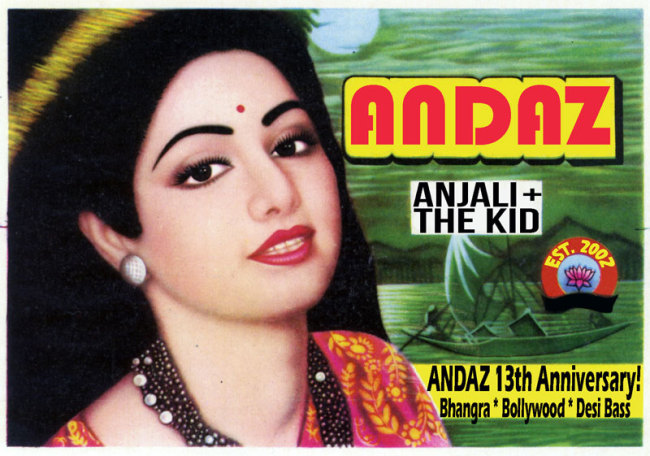
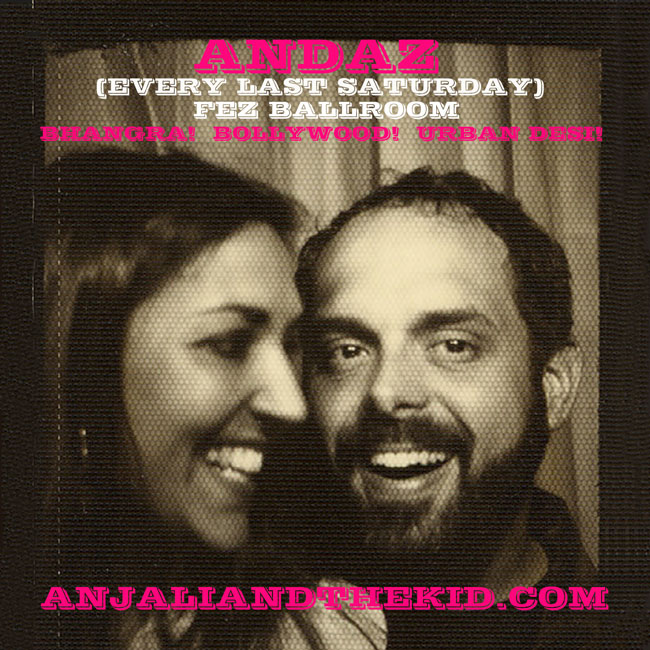
Last night was the one-year anniversary our Andaz party moving from Fez Ballroom to Rotture.   When we were DJing our final night at the Fez, all the staff there, who really wished us success at our new home, were very vocal in assuring us that our crowd was so dedicated that they were absolutely going to follow us, and we didn’t have to worry about re-establishing our night at a new club.

Things turned out to be very different than their assurances.

Our first nights at Rotture were cursed to occur on some of the only severely hot nights in a very mild Summer, and we only saw a tiny fraction of our old crowd at the Fez turn out to dance.   After seven-and-a-half-years where we consistently played to 300-400 people every month, all of a sudden we were playing  to tiny (but highly-enthusiastic) dance floors of less than a hundred people.  The Desis who would come out would swear that we could never establish a successful Desi night on the East side of the river, as “Indians don’t cross the river.” (All Indians except themselves, I would guess.)  Anjali always comments on how popular Nicolas Restaurant is with Desis, located only two blocks from Rotture, so she knew that was a lie.  However, there is no denying that Rotture is in a relatively desolate industrial setting, compared to Fez’s location downtown, just off W. Burnside St., and that could be daunting to a recent immigrant to Portland, especially one more familiar with the West suburbs.

What we realized from these early parties, was that we weren’t simply tranferring our long-lived and much-loved dance party to a new home, but establishing a completely new party.  Our closest friends went to great lengths to come out and wish us well at our new home, even ones that almost never come out to dance parties, and we had some of our old Fez crowd make the transition, but the overall turnouts at the parties felt like a completely new crowd.  And it was a crowd that seemed to really be feeling hip-hop bhangra, and really not feeling filmi house.  Now this is ironic, as when we first started throwing dedicated Desi dance parties nine years ago, Anjali and I were quite happy playing full evenings of bhangra music, with just a few sprinklings of Bollywood numbers, but we quickly learned that if we wanted broad Desi support for the party we would have to start playing more Bollywood.  A lot more.  This was tough at the turn of the millennium, as we have always had a very mixed crowd, and there was very little Bollywood music at the time that appealed to non-Desi dancers.  There was a (mostly awful) massive bootleg bedroom Bollywood remix industry at the time, because even Desis wanted to hear their music remixed.  Slowly the Bollywood music industry caught on, and more and more soundtracks began being released with remixes included, and the productions of the original Bollywood songs got more and more in line with the expectations of a Western dancefloor as well, such that now when I play for goreh I will often play more Bollywood than bhangra, and the opposite used to be true.

Back in our early Fez days Anjali was quite happy to continue playing mostly bhangra at Andaz, no matter how much non-Panjabi Desis wanted to hear filmi, but I was determined to reach out to them, and began researching danceable filmi in earnest.  Now the secret of Desis is that many will claim to only love the classics, and hate how awful the industry is these days, and then be singing along the loudest to the most recent songs from the Bollywood hit machine.  What this means is that the classics will always have their place, but you better be up on the latest hits (or their sometimes-dated notion of the latest hits) if you want to DJ for a Desi crowd.  So I started buying piles of crap Bollywood soundtracks, and crap Bollywood mixes, hunting for those elusive tracks that would work for our mixed dance floor.  What at first started out as a mission soon became a passion, and after weaning myself away from an aversion to cheeze, I actually started really liking a lot of contemporary filmi. Not all of it, and not even all the hits (A lot of massive Bollywood hits have never been played at our night because they are awful. Yes, awful.  And if you think the Bollywood songs we do play are cheezy,you should hear the stuff we sift through and leave at home.), but enough that I became more and more excited about playing filmi over the years, and would often arrive at Andaz more eager to play current filmi than bhangra.  This worked fine when there were large contingents of filmi-loving Desis in the house, and not so well when they decided not to show.  Well, you might say, I am a gori/gora and I come to your night, and I actually love filmi best.  Yes, I know there are some of you out there, but what makes filmi really work at our night is large crowds of people fluent (enough) in Hindi, and immersed in Bollywood –singing, dancing, and pantomiming along, which I don’t see goreh filmi lovers doing too much of.

When we moved Andaz to Rotture I was committed to maintaining the old format of a mix of bhangra and filmi, with a sprinkling of South Indian and urban Asian flavors, but our new dancers were mostly underwhelmed by my attempts to play filmi, especially later in the night.  Part of this is that the majority of our goreh crowd loves bhangra, and can get with faux-bhangra Bollywood numbers more-or-less, but they are not into the house sound that dominates so much filmi dance music these days.  At our early Rotture parties I would often go on after midnight, play some filmi-house, and watch the majority of the often early-arriving goreh dancers clear the club.

Which is another new aspect of our Rotture Andaz experience, early admission specials.  When we threw our eight-year anniversary of Andaz at Rotture last Summer, we realized we needed to do something drastic, to really convince people to make the journey to our new home, so we made admission free until 10pm. 50-some people showed up early, and we realized that this was a tactic to stick with, especially after we did the same thing in August and 100-150 people took advantage of the deal.  From then on we made admission three dollars before 10pm, and we consistently get up to 100 people before 10pm.  And these are not people who show up to lounge, they often go straight for the dance floor without so much as grabbing a drink.  This changes the dynamic of the night considerably.  At the Fez we never had early admission specials, and we would play lounge music for quite some time at the beginning of the night, and only unleash the dhols when a sizable crowd had shown up and were eager to dance.  Now we are playing total bangers in the first hour to a packed dance floor.

At the Fez things often wouldn’t get really rolling until 11pm, so sometimes people would show up close to 9pm, sit around for an hour or so and then leave.  I never knew if these people came back later in the evening, or if they left our party thinking it was dead and no one ever showed up.  At Rotture  we can have the opposite problem, which is that so many people show up early, sometimes things start dying down earlier than they should, just because people have already been dancing hard for so many hours.  Fortunately we are getting a bigger and bigger late night crowd at Rotture, and that is one development that I am personally very happy about.  More people staying late is good.

What’s also good is that despite dire predictions to the contrary, more and more Desis are making the trek across the river to see just how good things can be on the East side.  And I am personally happy that there are some South Indians among them, because I love being able to play more South Indian film music to an appreciative crowd.  Whether you are Desi or farangi, new attendee or someone who has been coming for nearly nine years, thank you for going so buck crazy and making Rotture such a fun place to play each month.  You are proudly carrying on the tradition that is Andaz at our new home.

In two months we will be celebrating the nine-year anniversary of our Andaz party.  I am personally very excited to be celebrating such a milestone.  I was very focused on gettting to our five-year anniversary, and now every one after that is just gravy, but this has a special resonance, as we have shown our ability to get kicked to the curb, and come back stronger and fiercer than ever.  The Fez will probably always hold a special place in the hearts of some of our fans, but Andaz is alive and well and it is at Rotture.

IK

The Rebirth of ANDAZ at Rotture

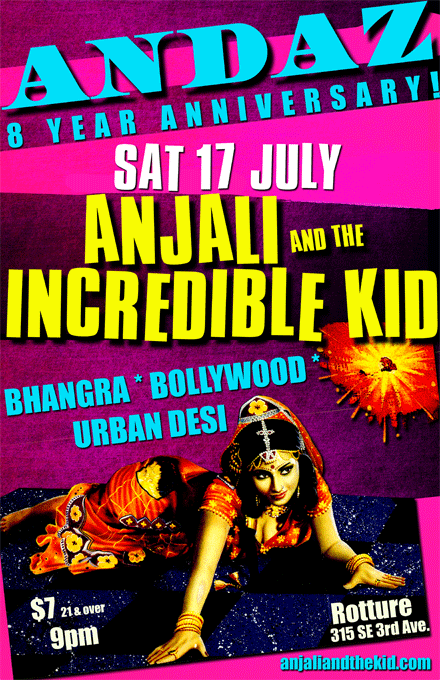
For those who haven’t heard the news, ANDAZ moved from the Fez Ballroom after seven and a half years, and is now at Rotture on the East Side.  We will be celebrating our eight-year anniversary on Saturday, July 17th, 2010.  At the Fez we celebrated our anniversaries in November, since that was the month that we moved Andaz to the Fez, but actually the party started in July 2002 at Lola’s Room, so now that we are no longer at the Fez, it doesn’t make sense to use the November dating system.  Now our ANDAZ anniversaries will be in July, the month we first threw our dedicated desi party.

Because Rotture already has a full schedule of monthly parties, the regular timing of ANDAZ is going to change.  Starting in August 2010 the party will be held on the FIRST Saturday of every month.  Flip-flop your party planning, because we don’t want you to miss out on any of the fun.

Thanks for eight years of support, Portland!

IK

The end of Andaz at Fez Ballroom

The only constant is change.  After seven and a half years of packed dance parties it is time to say goodbye to Fez Ballroom.  Not something Anjali or I ever wanted to happen, but the club will be changing its format on all its Saturday nights.  We were the longest-running night in the club’s history.  The popular Shut Up and Dance night on Friday nights actually moved to Fez Ballroom from Lola’s Room after we had already been playing at Fez for a year.  During that year we were the only consistently successful night at the Fez, and the manager Blaine Peters would tell us that we brought in the money at the end of the month that kept the club afloat.  Not that one can expect any loyalty in the world of clubland.

While it might make sense to assume that the popularity of our night had waned, that is hardly the case.  We are still fortunate to have a large and avid fan base who have packed the Fez the last Saturday of every month.  Our crowd has never been a crowd of heavy drinkers; our fans come out to dance.  Unfortunately clubs are in the business of selling alcohol, and the bottom line is that other dance nights in town sell two to twenty times as much alcohol as ours does.  But even if the night was packed with binge drinkers all night long, we are still only one Saturday a month.    We have a very unique sound and we are fortunate to have as much support as we do in Portland, but we have learned to focus our energy on one bhangra and Bollywood dance party a month, to keep the party packed and exciting.  The management of the complex that houses Fez Ballroom wants a consistent format that can pack the club with expensive drinkers every Saturday of the month.  That is not our format.

Our “format” is playing what we love, sharing the most exciting music we find with happy dancers, and doing it month after month, year after year.  Saturday, April 24, 2010 will be our last night at Fez Ballroom, but who knows what the future will bring?  We will not stop loving music, and we will always attempt to find opportunities to share our discoveries with the people of Portland.

Thank you to Blaine Peters who first booked us at the Fez Ballroom.  Thank you to Michael Ackerman for being a wonderful manager these last many years after Blaine moved on.  Thank you to Heather, KC, Dan, Hillary, Mike, Steve, Tibin, John, Amanda, Sarah, Jen, and everyone else I am not remembering now, or whose name I never did a good enough job of cementing in my head.   All your help in making our night a success over the years is greatly appreciated.

Thank you to all the dancers who made for such memorable parties.  We never could have done it without you.

Love,

IK

CORRECTION:  A bartender at the Fez begs to differ with my opinion that we don’t have a drinking crowd.  I base my judgement on the fact that the bar is sometimes empty, and the dance floor is always full, but he tells me we do have a crowd that drinks, and we do good bar numbers.  He can’t understand why the mgt. is phasing us out since our night is “kicking ass.”  Oh well.

Anu Malik still has it!?!?!?!?

Before Anjali started DJing with me in 2000, I had only been exposed to vintage Bollywood; I didn’t know the contemporary scene at all.  I was only buying and listening to vinyl at the time, and Bollywood hadn’t put a record out in a decade by that point.  Anjali bought me a Hum Dil De Chupke Sanam cassette, and  I just couldn’t get into at first.  She also got me a Chori Chori Chupke Chupke cassette, which I liked a lot more.  Then I discovered the Fiza soundtrack, which had quite a few songs that I really liked. Then I got into the Asoka soundtrack.  All three of those soundtracks have one thing in common: music director Anu Malik.  That made Anu Malik my first favorite music director of contemporary Bollywood soundtracks.

While I did meet at least one Indian who was a big fan of Anu Malik, most of the Indians I talked to denigrated him, and saved all their praise for A.R. Rahman, whose aesthetic I just didn’t like as much.  (Truthfully, I have enjoyed A.R. Rahman’s newest soundtracks much more than the bulk of his work.  I definitely feel like he is creating the best work of his career these days.)  Anu Malik was seen as a “copycat;” A.R. Rahman as the first music visionary since R.D. Burman.  Whatever, Anu Malik was the one who saw much more play in my DJ sets.

Those three soundtracks all came out in 2000/2001, and despite buying dozens of more recent Anu Malik soundtracks, some with some songs I really like, I think that those years were his best.  Other than the Ugly Aur Pagli soundtrack, I have found most of his latest offerings to be atrocious.   I was firmly convinced that he was over the hill, and done for good.

Then came Kambakkht Ishq. (The soundtrack.  Not the song itself.)  Wow.  I didn’t know he still had it in him.  Even though RDB were invited by the producers to contribute a track (much to Anu Malik’s annoyance, from what I’ve read), I think Anu Malik came through with the best songs.  “Lakh Lakh” is great, and “Bebo” is a wonderful throwback to ’80s-style Bollywood disco.  Anjali claims to hate “Bebo,” but I know she will be won over eventually.  She has more resistance to Bollywood cheese these days than I do.  At least at first.

I don’t know what the future will bring for Anu Malik, but I know I will still be paying attention.  And after the last couple years, that really surprises me.

IK

Mumbai

Our next and final destination in India was “Mumbai.” Every Indian I talked to called it Bombay, and in conversation with them I felt like I would be considered benighted if I said Mumbai. Traditionally the name of the city is Mumbai in Marathi and Gujarati, Bombay in English and Bambai in Hindi, Persian, and Urdu. Since I was speaking English with every Indian I met, we all talked of Bombay. (Like how in Chennai all the English-speaking Indians I talked to called it Madras.) When the far-right Hindu fundamentalist Shiv Sena party came into power the name of the city was officially changed to Mumbai in 1996 in honor of a Hindu goddess. I will refer to the city by its official name throughout this report, although I rarely called it that while I was there.

Originally Anjali and I were going to take a twenty-six hour train from Chennai to Mumbai. After realizing that plane tickets were less than $100 US, it made more sense to spend one of our final days in India exploring Chennai some more, and not sitting on a train, which we had done plenty of already. In India you can fly from one end of the country to the other in two hours, but a train will take 36 hours or more. Riding the rails is a quintessential Indian experience, but if you have the money, you can certainly cover much more of the country, in far less time, if you opt to fly. And let me tell you, on the cheapest Indian budget airline, they will take far better care of you, and offer you far more in a few hours, than you will get in days on a Western airline. In less than two hours we got offered water four times, a croissant, tea or coffee, a dosa. a couscous-like dish, dal and coconut chutney.   Even the terminal staff take care of you.  From the moment we arrived at the terminal, friendly airport staff circled us, eager to help us navigate the airport and its procedures.  No one seemed to be looking for a tip, and the luggage carts are free.

Stepping off the plane and on to the jetway I was hit by a blast of hot, humid air welcoming me to Mumbai. The new Mumbai domestic airport impressed Anjali with how new, shiny, and immaculate it was, almost making her forget that we were in India. Harsh reality intruded when we exited the airport and were besieged by shark-like taxi drivers eager to grossly overcharge us for the ride to our hotel. I stayed with our mound of luggage while Anjali went in search of a prepaid taxi stand that we learned didn’t exist. What an oversight! Why create a fancy new airport and then leave tourists at the mercy of conniving taxi wallahs? We decided our only hope was to try to find an honest face in the crowd, and Anjali settled on an elderly grandfather, who after learning our destination promptly turned us over to the sketchiest looking con artist on the lot, a low-rent Bollywood villain sipping chai through an enormous bushy mustache. His boys wrestled the luggage cart from me and wheeled it over to the driver’s car. We kept insisting “meter” to which he all too happily agreed, “meter!”

Too happily.

What was wrong here?

Once all our luggage was in his car, his boys hung around long enough, fencing in the car, that we eventually paid them off for the grueling task of pushing a luggage cart a few dozen feet. The driver than explained that he needed to take us to his other AC car. “We don’t care about AC,” we explained, to which he responded that the meter in the car we were in didn’t work, the fuse was broken, and we would need to switch to his other car, whose meter worked. We smelled a rat, and sensing this, he kept insisting that he was “president and CEO” of his company, and he wanted to give us his card, as he didn’t just want our business for the trip to our hotel, but for the entire time we were in Mumbai.

He drove us to a nearby parking lot, and moved all our luggage to his other car. He didn’t strike me as someone that was very fond of physical labor, but he eagerly hefted our bags from car to car. I made sure to take photos of both license plates, figuring that we were in for a mother of a scam. The digital meter in his new car was under the steering column, and not on top of the dash. A few minutes from the airport it was showing a fare far higher than it should have, as if we had already traveled half the distance to our hotel, which was still twenty-some kilometers away. Our driver was very chatty, and it soon came out that he was from Jabalpur, Anjali’s family home, and he started referring to Anjali as “Sister,” so happy it made him that her roots were in his home town.

Anjali’s mother has a saying, “Never trust anyone from Jabalpur,” which this miscreant proved in spades. The fare was spiraling up at such a comic rate that I placed a call to our hotel, loudly asking what the fare should be from the domestic airport. Our driver piped in that the car was “AC,” and was only too eager to find out what they had said after I hung up. I told him, and he quickly started pressing buttons on the meter. Anjali and the driver made eye contact through the rear view mirror while he did this, and he quickly moved his leg over the meter, so that she couldn’t read it for the rest of our trip. She did see that before he started pressing it the meter said that we had already gone 81 km, about four times the actual distance of our entire journey, which we had only just begun. He explained that the rate may be more due to traffic, which is bullshit, because fares are determined by kilometer, not time.

I simmered in the backseat, and he must have begun feeling the heat, for after a while he asked me, “Sir, why are you so unhappy in India? If you are not happy; then I am not happy. Tell me why you are not happy.” I locked eyes with him in the rearview mirror and said, “There are too many chors (thieves) in India.” At this he began protesting loudly and became very defensive. I shouted that I knew what was going on with the rigged meter and that he was cheating us. He insisted we go to the police station before the hotel to clear this up, as “the customer is god,” and once again he could not be happy if I was not happy. I told him how eager I was to go to the police station, and that I had good photos to show them. After calling his bluff he changed tactics with me and began first by talking about how it is America that is full of chors. I agreed to that, and that there were chors everywhere. He loudly yelled that India had all the chors, not America, but I think he was yelling the opposite of what he was trying to communicate. He began complaining about how corrupt the police in Mumbai are, and how all they want is money. He segued into talking about 26/11 (This is how Indians refer to the attacks on Mumbai, as Indians put days before months when they write a date, and the attacks began on November 26th.), and how the reason it dragged on for sixty hours was because of the corruption of the police. After our yelling match he attempted to suggest that everything was OK between us, and he kept wanting to shake my hand from the front seat, but I namasted him instead, which he returned. I told him I wouldn’t shake his hands until we were at the hotel and all our luggage was out of the car. He made no more mention of going to the police station, and ignored me for the rest of the trip, only addressing Anjali, and always as “Sister,” saying we could ignore the meter, and “pay as you wish.”

Anjali didn’t want any more tension for the long traffic-gridlocked ride to our hotel, and wanted me to drop it, but I was all too eager to make this guy squirm the whole way to the hotel. I was clearly channeling a lot of my anger over all our auto wallah rip-offs in Chennai, but I was primarily angry at him for all the hapless tourists he had ripped off in his forty years as a cab driver in Mumbai. He probably imagined all foreigners are rich and I imagined most of them could probably survive the thousands of rupees he would steal from them, but I also imagined people that might have been robbed by him that really couldn’t afford to lose the money at that time. My sense of injustice was thoroughly tweaked, but for Anjali’s sake I stopped yelling and simply smoldered. When we got to the Sea Green South Hotel, I photographed the meter while our driver was dealing with the luggage. It read 150 rupees more than the highest fare the hotel front desk person said we should pay, even after he had reset the meter from its original astronomical progression.

I exited the car to face the driver who was waiting to be paid. I took a photo of him and said that I wanted a photo of “the one honest man in Bombay.”

I handed over the fare the hotel said I should pay and told him not to rip off any more tourists. He looked confused. “Don’t steal,” I said. “Don’t steal from foreigners or god will curse you! God will destroy you!” I could tell from his adornment and his language that he considered himself a devout Hindu, and I wanted to use language he could understand. Maybe if I invoked the threat of divine retribution he would change his ways. He followed me into the hotel making a scene and demanding his additional 150 rupees. –So much for “pay as you wish.”–  While he attempted to win the front desk staff over with his tale of being ripped off by tourists, I showed the staff the photos I had taken on our digital camera. They told him he had gotten plenty and ordered him out. He kept insisting that “God is good,” and continued to make a scene as he exited. Such was my rage that I kept yelling “God will curse you! God will destroy you!” until he was out of earshot. The whole experience reminded me of the sign painted on the back of a truck as related by Suketu Mehta in Maximum City: “101 out of 100 are dishonest. Still my India is the best.”

Anjali quipped, “Getting away with what you can, that’s India.” She was very sympathetic to the man, and none to happy that I sat in our hotel room and had very uncharacteristic thoughts of revenge and a desire for the driver’s utter destruction. Anjali said he was an “uncle” and deserved at least a little respect. She figured he didn’t even see himself as a thief, just someone who was trying to get away with what he could.

We stayed at the Sea Green South Hotel, which was our second choice after the identical adjoining Sea Green Hotel where we stayed at on our prior trip informed us that they were full. We had a romantic attachment from our last stay there, and Anjali’s mother’s family stayed there when her mother was a child. There are fabulously expensive hotels along Marine Drive, overlooking the ocean, but this is the only affordable option we know of, and it is close to the action, right where we want to be, in walking distance of much of central Mumbai. The Sea Green hotels are Art Deco constructions of the 1940′s, built to house British army officers.

We rested in our hotel in our first floor sea-facing room, and after a nap my anger had subsided substantially. I really wanted to report the taxi chor, but I knew it would mean spending all day in bureaucratic hell in a police station and nothing ever coming of it anyway. It took me days before I could let go of the idea, and accept that there were many other ways I would far rather spend my limited time in Mumbai. Sorry if you are the next tourist scammed by this guy.

When we first arrived in Mumbai on our last trip, we stayed with our friend Rajvi and her family, and as she had been living in London recently, we weren’t even sure if we would see her on this trip. We first met in Portland when Rajvi attended Lewis & Clark. She was one of the earliest supporters of Anjali and my professional DJ career, attending all our weekly shows at the Kalga Cafe, and then our larger dance parties at Lola’s Room and the Fez Ballroom. We hadn’t seen her since our last visit to Mumbai five years ago. She called us in our hotel room, and it was great to hear her voice after so much time. We made plans for the next day and then Anjali and I caught a taxi for far too much money down Marine Drive to Cream Centre, a forty-year-old vegetarian restaurant that serves hygienic snack food to the middle class including some very funky fusions and what they claim are the “world’s best nachos.” We remembered Cream Centre fondly from our last trip, but we stuck to Bombay, Delhi, and Panjabi snack food, and didn’t take a chance on their nachos or other unusual fusion dishes. We ordered various combinations of their chana served with different starches and sauces while we watched the sun set on the ocean across from us. Their masala chai comes in a teapot filled with a voluminous amount of tea and spices, including fresh mint. After our meal we crossed Marine Drive and walked for a while on Chowpatty Beach, where men were available for hire to push your child around in a plastic truck, which in America would have been motorized, but the only functioning electronics in these vehicles were radios blasting current Bollywood hits. I couldn’t believe that we were completely ignored and unmolested the whole time we were on the beach. I had remembered being swarmed with beggars when we visited Chowpatty Beach five years ago. After sunset we walked the long promenade along the sea to our hotel, which has been thoroughly “cleaned up,” meaning there are no more stands selling pani puri and bhel puri to people strolling.

As much as I could have easily spent months in Delhi, and as much as I loved Hyderabad, arriving in Mumbai -even with the hassles- I was quickly reminded that it is my favorite city in India.  You can avoid a lot of frustration by staying out of traffic,  sticking to the core of the city, and walking. I love walking around Mumbai:  beautiful hot sunny days, the skies cleared up by ocean breeze, endless vistas of Indian Gothic architecture, long gated parks, actual crosswalks with traffic control lights, and a sea of humanity. Most people ignore you, like in New York, or any other large metropolis used to a regular flow of tourists, and a heavy influx of immigrants.

We arrived in Mumbai on the day of Barack Obama’s inauguration. The night (It happened 10:30pm Indian time.) of Barack Obama’s inauguration was the only time we were in India that we wanted to find a group of Americans with whom to spend our time. We figured the ex-pat’s enclave of Leopold’s that was attacked on 26/11 would be insanely crowded, if not impossible to get into, so we searched for other options on a long walk through Mumbai, while I also searched frantically, and unsuccessfully, for a copy of Timeout Mumbai to find out what our entertainment options were while we were in the city. Two months after the attacks, the city seemed back to normal, except that now there are soldiers with sub machine guns posted behind mounds of sandbags on corners throughout the central city, and Anjali noticed new billboards with terrorism warnings and admonitions to be a part of the effort, keep your eyes open, and report anything suspicious.  My cheeks passed machine gun muzzles inches away, while the soldiers holding them were terrorized, according to anonymous informants, by the mosquitos  and rats that made the damp sand bags home.  In our long and indirect perambulation we  finally found the Gateway of India, now with all new associations. The nearby Taj Mahal Hotel is under intense security, and Anjali and I walked past their guards, the new security wall surrounding the building, went through their metal detectors, and got searched, in order to look for a copy of Timeout Mumbai in their bookstore, and to inquire about any inauguration parties that might be occurring there. They knew of nothing, but they suggested the nearby Tendulkar’s -the celebrity cricket player’s namesake restaurant.

The televisions in Tendulkar’s were tuned to cricket, but they said they could set one up for us to watch the inauguration, but I didn’t want to force a room full of Indians to watch an inauguration they apparently cared little about, nor did I want to pay the astronomical amount of money it would probably cost to spend hours at Tendulkar’s, so we tried Jeffrey’s, near our hotel, which our friend Rajvi recommended. At Jeffrey’s the TVs were tuned to the inauguration and not cricket, but the TVs were on mute with a Wham soundtrack playing over the sound system. As a last-ditch attempt to get some dinner before we headed to our hotel to watch the inauguration, I bought several pastries from their dessert counter, which I ate from a box in front of the TV while we watched the historic broadcast. Anjali saw me as unconsciously saluting the inauguration with my American indulgence.  The chocolate coating of the pastries had the right texture, but no flavor, and the pastries tasted largely of whipped cream and chewy bread.

The next day the Indian newspaper analyses of the inaugural address were entirely focused on what intimations there were of Barack Obama’s intentions for India and to what extent he was going to crackdown on Pakistan. India is eager for Obama to play hardball with Pakistan.  Barack Obama has a lot to prove to equal Bush in the eyes of Indian commentators, as Bush was responsible for the legislation which allowed civilian nuclear technology sharing with India. A commentator noted that in Obama’s foreign policy statement, India, the world’s second most populous country, the world’s largest democracy, and one of America’s allies, isn’t mentioned at all.  I guess that currently our new administration is not thinking about how our relationship with India will play a role in the future of international politics.

Our second day in Mumbai we woke up and went to Shiv Sagar , another hygienic middle class place to order Bombay snack food, South Indian dishes, Chinese food, North Indian food, etc.  We got their (vegetarian) Bombay Burger and Tandoori Burger along with a nice and oniony Rava Masala Dosa. We went to Chor Bazaar, alleys of antique shops in a predominantly Muslim neighborhood dotted with mosques, where we had bought a lot of Bollywood records and ephemera on our last trip. We went back to the dusty shops we remembered from last time, and a couple more in the area of Mutton Street.

Our first time in Chor Bazaar we had spent many hours digging through man-sized stacks of rat-chewed, urine-reeking, mold-spotted albums, but this time we were only willing to look through ones in better condition, as we have so many Bollywood records at this point, we hardly feel a need to buy the most battered ones in existence. Even the better condition records in Chor Bazaar are quite filthy, and after many hours of getting our fingers dirty we ditched our records at the hotel, cleaned off the grime, and took a taxi to the suburb of Bandra to meet up with our friend Rajvi and her friends Shruti and Shanti.

Everyone was in high spirits as Rajvi drove us to the rooftop lounge of the Del Italia restaurant that goes by the name of Il Terrazzo in the Juhu suburb of Mumbai. We were there to see Bollywood singer Anoushka Manchanda sing her own material with a backing band of guitar, bass, keyboards and drums as part of a series called Daddy’s WindSong Wednesdays. Except for a song inspired by the Mumbai terror attacks, all the songs were in English, usually about bad relationships. Anoushka referred to herself and the audience as “middle class” and said the recent terrorist attacks have convinced her, a non-voter, that the middle class, who traditionally don’t vote, need to start.  She talked about when she was broke (living at home!) when she only made $40,000 rupees a month as a VJ.  She had to live on ramen by the end of the month.  Meanwhile, I’m trying to square this with the fact that nearly half the population of India lives on less than 100 rupees a day.

Anoushka swore in both Hindi and English from the stage, and talked openly about sleeping around and drinking too much, very shocking to me after months in what is mostly a very conservative culture. And she came with her parents!  She was quite entertaining as a personality, even though I got tired of her musical set well before it was over. She did do a fun parody-medley of some ’70s Bollywood songs about how the host of Daddy’s strongarmed her into performing her music live. Afterwards the girls wanted to take us to their favorite dive bar Janata, but the bar were closed, only selling liquor through a boy that stood out front of the shuttered edifice.  After placing a to-go order of wine and deliciously oily chili chicken and chili paneer passed around the car and eaten with fingers, we headed to Chowpatty Beach for a late-night stroll. On the way there Shanti was so overcome when the current Indian favorite slow jam “Guzarish” from the Hindi Ghajini soundtrack came on the radio that the sun roof was rolled back so she could stand on her seat and dance in the evening breeze. The nighttime stroll never happened, as security was there to keep us from walking on the beach. After much clowning around on the promenade under the lights of the Queen’s Necklace we called it a night.

The third day Rajvi met up with us to take us back to Swati Snacks, where we had first eaten five years ago. They serve all sorts of Gujarati vegetarian specialties that aren’t available anywhere else in Mumbai. Most of the dishes on the menu I’ve never heard of, or have any idea what they are. As a Gujarati, we leave it up to Rajvi to do the ordering. My favorite dish was called makai khichu: a grain and rice dish with a mashed potato-like texture, with corn kernels stirred in, and a hot chutney on the side. Rajvi had such memories of my joyful eating that she brought a camera just to record my reactions as I ate.

We then learned what a pain parking in Mumbai is, as we searched for chai or paan, but eventually we made it to the Oxford Bookstore for tea. I was horrified to learn that the bookstore had pulled all books by Pakistani authors off the shelves after being threatened by the Shiv Sena. The police even advised they take the books off the shelves after hearing of the threat.  So much for freedom of the press. After browsing, Rajvi took us to the Bandra suburb, where she dropped us at a record stall we had been tipped to by one of the record dealers in Chor Bazaar. They were very friendly and affordable, and we filled up my backpack with records.

We had learned that our friend DJ Rekha from New York was in Mumbai as part of a DJ tour of India that had been arranged by the United States Consulate General, Mumbai. We caught an auto from the record stall to the area of Bandra on the sea called “Bandstand” near the Taj Land’s End. The place was under high security due to a big political meeting occurring at the Taj including human scum Gujarat Chief Minister Narendra Modi, so we had to get searched on our way to the outdoor amphitheater where Rekha was performing. We followed the sound of the bass, and made it to the amphitheater. The venue and the time of Rekha’s performance had both been changed at the last minute, due to the big political get-together, so there were very few people in attendance at the performance, part of the Mumbai Festival. There were some Indian break dancers on stage, and Anjali joined them with her own bhangra moves, which the crowd cheered. Anjali danced for so long on stage, with such abandon, that a group of Indian uncles approached her afterwards to congratulate her on her dancing and insist that she must be Panjabi, despite her assertions to the contrary. Rekha played bhangra and hip-hop, including songs by Lil’ Kim and Mary J. Blige. Representing Mumbai she played Bollywood nugget “Yeh Hai Bombay Meri Jaan,” and representing Brooklyn, she played a Biggie song, and Santogold’s “Shove It, ” which may have been its Mumbai debut.  That’s just a guess.  Nobody we talked to in India had ever heard of Santoglod.

The show was shut down early so that the speeches of Muslim-slaughterer Narendra Modi and others weren’t interrupted. In 2007 the United States revoked Modi’s visa:

on the accusation that he was responsible for violations of religious freedom as per the International Religious Freedom Act of 1998. He was again denied a visa to the United States in August of 2008 for his human and religious rights violations. The Coalition against Genocide (CAG) said that they have urged the state Department to put a lifetime ban on issuing a US visa to Narendra Modi. [wicki]

While we were in Chennai we watched a press conference on the news where a bunch of billionaire heavy hitters from India’s business community declared their desire to see Modi become Prime Minister, as he is seen as being such a friend to development in his state of Gujarat.

We got a ride with Rekha and her assistant/cousin Preksha in a consulate SUV to the super-rich tower apartment they were being hosted in, with amazing views of the city like I had never seen before.  I had been to a lot of swanky places in India, but this felt the most luxurious. Rekha suggested we go to the Hard Rock Cafe for dinner, which is an establishment Anjali and I have never patronized, but it seemed wacky enough to be entertaining in a lowbrow kind of way. We arrived at the Hard Rock Cafe to see a long line of guys waiting to get in. “Stags” as single guys are known in India, are not welcome at most clubs. Since I was with three women, we waltzed right in ahead of the long line. Unfortunately I still had a very full and very heavy backpack filled with Bollywood records, so when we discovered that it would be a long wait for a table, I had to stand in the bar area straddling the backpack awkwardly, while people jostled all around me. Our wait was epic as we were serenaded by a DJ playing songs such as Bryan Adams (India’s favorite) “Run to You,” Def Leppard “Animal,” U2 “With Or Without You,” Metallica “Unforgiven,” and Bon Jovi “Livin’ On A Prayer” while wannabe Indian rockers holding beers bobbed their heads and sang along all around us.  While the vibe was incredibly American mainstream, I had to remember that this was an alternative lifestyle in a country overrun by Bollywood music.

When we were finally seated we learned that there was special entertainment for the evening, Indian rocker Gary Lawyer, whose name meant nothing to any of us. We learned later from our friend Rajvi that Gary was the  original Indian rocker of her childhood in the ’80s. To us he just seemed like an embarrassing, washed-up guy with a gray mullet. He started by singing songs from his “new album” to digital backing tracks, including a song dedicated to saving the tigers, which was accompanied by a video broadcast on screens throughout the club showing scenes of tiger slaughter. His lyrics were trite and all in English, and he sang them with great earnestness. When he said he was promoting his fifth album we were shocked, as we couldn’t believe he even had one release to his name.  Eventually a band joined him onstage for old rock’n'roll covers, including “Break on Through to the Other Side” (Apparently Gary Lawyer was once considered India’s Jim Morrison.), “Mustang Sally” and “New York, New York” which we jokingly insisted must have been in Rekha’s honor, so we suggested she join him on stage, to no avail.  I later learned he began his career in the nightclubs of New York in the early ’80s, so his covering that song makes sense, despite how befuddling it was at the time.  He seemed to clear many people from the club, but there were people standing in rapture who were vocal and into it as well, miraculously applauding after each song.  When he performed an oldies medley with many songs made famous by Elvis Presley I noticed two middle-aged men engaged in a passionate twist contest on the floor.

The food was atrocious, and everyone except me left the majority of the food on their plate. I ordered pasta which I figured they couldn’t mess up too bad, but Rekha’s chicken was pink on the inside, and she couldn’t even eat her burger, which she said was salty and all wrong. I’m sorry, but if the Hard Rock Cafe can’t even get a burger right there is something seriously wrong going on in the kitchen. The service was comical in both its absence, and its repeated bunglings. We left just as Gary Lawyer was introducing Louis Banks, “the greatest musician in India” so who knows what we missed out on. Of course Louis called Gary Lawyer “the greatest singer in India,” so that didn’t bode well for the music they were to perform together.

That night we were supposed to go to a hip club called the Blue Frog where the owner Dhruv was celebrating his CD release. Based on who I knew was going to be there, the party probably would have been attended by everyone who is anyone in the Mumbai electronic music and DJ community, and no doubt would have been an unsurpassable networking opportunity.  After hours of hideous mediocrity at the Hard Rock Cafe I had no interest in doing anything other than going to bed. This was typical of how we spent our time in India, managing to avoid anything that could have helped our DJ career in any way. At least most of the time we were eating really good food.

Friday we were looking forward to seeing Slumdog Millionaire on its opening day in India. We had been reading so much about it in the Indian press, and weren’t even sure if it was going to release before we had left the country. The movie had garnered a fair amount of controversy as some people felt that the movie was “poverty porn,” and that it emphasized the poorest elements of India, because that is the only way the West is capable of viewing India. Some commentators argued that a Western director came in to show a picture of poverty that gives people a one-sided view of India. There were opinion pieces upset that Danny Boyle didn’t do a movie about Indian billionaires and skyscrapers and shiny new malls. Certain segments of the Indian upper classes are sick of the traditional Western image of India as a place of overwhelming poverty, and they want their realitly of affluence to be reflected in the world media. There were protests organized against the film, with people demonstrating in front of some theaters on opening day. The word “slumdog” is not known in India, and many slum dwellers took the title literally, and assumed the film was calling them dogs. There were Hindu activists who didn’t like the portrayal of the Lord Rama in the film, who felt that the use of the god’s image in the scenes of the Hindus killing the Muslims was highly inappropriate. There are ongoing protests and lawsuits against the film in India to this day.

We were fortunate that our friend Jacques was in Mumbai visiting from Singapore. We arranged to see an afternoon matinee of Slumdog Millionaire with him at the historic Art Deco 1930′s Regal Cinema in downtown Mumbai on opening day. Before meeting up with Jacques, Anjali and I ate at the very solid Delhi Darbar down the street from the Regal for a feast of North Indian food. I hadn’t had North Indian food in a while, as I wanted a break from the heavy oily sauces and rich and thick breads, but I waited just long enough to thoroughly enjoy this meal, heavy sauces, and thick breads alike. A half hour after our screening was supposed to start, and an hour and a half after we last talked to Jacques, there was still no sign of him. Such is the abysmal nature of Mumbai traffic. We bought another set of tickets for the next Slumdog Millionaire showing and walked down the street to do some shopping for handicrafts af Cottage Industries, hoping Jacques would call us on his cell when he finally got done with his epic taxi ride. We didn’t hear from him, but on our walk back by the theater Anjali checked the lobby to see that Jacques had arrived and was waiting for us.  We walked around a bit in the hot sun before the start of our showing.

Slumdog Millionaire was released in India in two versions, the original English one, and a version dubbed in Hindi called Slumdog Crorepati. The Hindi version has apparently done much better in India as it is too unrealistic for an Indian audience to accept that slum dwellers speak in perfect English to each other. Even I had trouble with those scenes. The theater was only partially full for the mid afternoon showing, and up in the balcony where we bought our (assigned) seats, the reaction was very muted, and I even thought I heard people shushing talkative moviegoers, which is a very un-Indian way to see a movie. People didn’t even applaud at the end. I thought the movie was entertaining, but I thought it didn’t maintain the tension all the way through, and the big emotional surge at the end never really happened for me. MIA got screwed on the Indian version of the Slumdog Millionaire soundtrack, as both versions of her “Paper Planes” track were dropped from the Indian release. No one that we talked to in India had heard of MIA, even middle class kids with eclectic music collections, and the soundtrack would have been a great introduction to India for MIA. Instead India will learn of MIA through just the highly processed verse of hers included on the “O Saaya” track. In all of India we only found MIA in one CD shop, the hip Rhythm House in Mumbai, which only had her second album.

Upon exiting the theater the three of us took pictures of each other in front of the Slumdog Millionaire poster framed outside the theater. It took me a while to notice that there were a lot of other people taking photos as well, all of Anjali. Apparently many news photographers were sent to take pictures of people exiting Slumdog Millionaire, and the way they were all circled around Anjali and taking photo after photo I wondered if they thought she was a Bollywood actress or something. After the movie we returned to Cream Centre with Jacques, and then we were off to his room at the Four Seasons in Worli to freshen up before seeing DJ Rekha perform at a nightclub in the suburb of Juhu.

Before dinner I got a worrying text from DHL that the last box we had shipped to Portland from Pondicherry was to be “returned to shipper,” and seeing as how incompetent the staff at the Pondicherry DHL were, I was afraid that a bunch of our South Indian music purchases were on their way back to India. After dinner and our arrival at Jacques’ fabulous room on the twenty-first floor I spent an anxiety-ridden evening on the phone with DHL staff in India and the US trying to determine why our shipment had made it to Portland, and then was returned to the East Coast, and seemingly on its way back to India. I needed this music for our return gig at the Fez Ballroom, and was panicked by this turn of events. Jacques was very helpful, and his room was the most luxurious site I could imagine to spend frustrated hours on the phone with call center staff in two continents. By the time I learned that the box was sent back to the East Coast for closer customs inspection, and that I didn’t have to worry about it being returned to India, many hours had passed, and we soon realized that with how early clubs are required to close by law in Mumbai, we would never make it to the Juhu club to see much of Rekha’s set before she had to stop. Anjali and I had looked forward to seeing Rekha and dancing with Rajvi, Jacques and friends, but such was not to be. I knew that once again in addition to missing out on a fun night of dancing and music, we also missed another prime opportunity to network with DJs, producers and promoters in the Mumbai electronic music scene. We managed to make it two months in India without going to a single nightclub to see a single DJ.

It was our fifth day in Mumbai before we got down to the serious business of shopping for contemporary music, as opposed to dusty old records. Vinyl record manufacture largely ceased in India in the late ’80s, so any music from the last twenty years is only available on CD or cassette. We started by going to Rhythm House, which is so densely packed with music and DVDs that I found myself constantly in someone’s (usually many ones’) path as I tried to hunker down in a section and methodically go through the contents. Hindi CDs run less than $4, but if you want a western CD it will cost you around $10 new. I am unaware of any place in India that sells used CDs. We then tried to find the Mumbai outlet of the Planet M chain, which we learned had recently “shifted” (just like the one in Chennai which we never found), and after some walking we found its now much smaller and underwhelming new location.

On the way there we found a record dealer selling records on the street. He had lots of great soundtracks, by some of my favorite music directors, but he wanted 150 rupees a piece for them, even though they were in bad shape, had their edges taped up, and he had gone so far as to write the price in pen on the sleeves. I complained that he was selling 30 rupee records for 150, and became indignant, claiming he didn’t sell 30 rupee records. He took us into an alleyway to show us even more records that he had stashed back there, but they were all in the same poor condition, and no matter how great I’m sure the music was, I wasn’t willing to pay his prices, and we didn’t like his attitude. We left after some looking, but without buying a single record. In the cab ride back to the hotel I suggested we try to contact some of the record sellers whose info I had gotten from DJ Rajah in San Francisco. Anjali groused that their records were probably as bad or worse as the ones we had just looked at, and I chided her for her negativity, since DJ Rajah had been so enthusiastic about the dealers he recommended. I called one of them to make an appointment for the next morning to see his wares. After picking up Indian suits Anjali had tailored, we then spent a large chunk of the evening at DHL shipping our final two boxes of loot back to the States. We finished the evening by going to Gaylord’s restaurant for a classic North Indian dinner.

Our final day in Mumbai we met up with the record seller recommended by DJ Rajah who turned out to be the same guy we had bumped into randomly the day before. We had the same frustrating interaction, except after many requests for records in better condition he brought out a not-too-bad stack. I bargained HARD with him to even get him down to 150 rupees each, as he wanted 250 rupees each for the ones in nicer condition. This was more than five times what I have ever bought records for in Mumbai. He really didn’t want to budge, but after pulling out the money I was willing to give him, and holding it out in front of him, he finally, grudgingly relented. Then he suggested we come back to his house where he had better records. What?? Now he wants to bring out the good records? We had no fun dealing with the man, and weren’t eager to spend any more time with him, so I made one final trip to stock up on Bollywood remixes at Rhythm House while Anjali made her final trip to Fab India to stock up on churidar.

Our friend Rajvi called us after we had returned to our hotel and told us she was coming to meet us. Knowing my love for food, she took us to Diva Maharashtracha in the Mahim area of Mumbai. It is one of three restaurants, along with Culture Curry and Goa Portuguesa, that line a block, and are all run by the couple of chef Deepa Awchat, and Dr. Suhas Awchat MD. They have a very cute and kitschy aesthetic to marketing themselves and their restaurants, and we actually met Dr. Awchat while we were eating. Diva Maharashtracha serves Maharashtrian home specialties that Rajvi says can’t be found at any other restaurant in Mumbai. Rajvi ordered dumplings of colcasia leaves, banana flower dumplings, a smoky, peanuty stuffed eggplant dish called Bharleli Wangi, a Vaal (field beans) dish with coconut and chilies, and Masale Bhat with Katachi Amti, which tasted like a super-flavorful biryani. I thought the food was fabulous, including very unusual savory and spicy Maharashtrian specialty non-alcoholic drinks, but I knew something wasn’t right when two staff came by late in our meal to ask if everything was “OK” and “not too spicy.”

Nooooooooooooooo!!!!! Don’t tell me they made it bland for my whitey ass. Nooooooo!!! We were being treated by our Indian host who ordered, yet still my white skin cursed me. I asked Rajvi if the food tasted blander than she was used to, and after thinking about it, she said that it was indeed blander than they usually serve it. I noticed that she hadn’t asked for it spicy, and I assumed that would be OK, but she, knowing that we like it spicy, didn’t ask for it any special way, not realizing that the staff would make note of my white skin and have the kitchen bland the food out for me. Arrrrrgggghhhhh. Fortunately there were a variety of very unusual and spicy chili-ridden chutneys, so I was able to inject some heat into the meal one way or another. I asked for menus for the two other restaurants, and I slavered over them for quite a while, fantasizing about the meals I would have to eat the next time we were in Mumbai. The Culture Curry menu, with its range of specialties from Southern Indian states looked especially tantalizing to me.

After gorging, Rajvi kindly drove us to the “Bandstand” area of Bandra, on the water, where we got tea at a place with large filthy windows overlooking the rocky beach. Rajvi explained that when she and her brother were children they would crawl along the rocks and see villagers conducting black magic ceremonies on the beach. Now there is only a restaurant with instant chai and coffee vending machines. After chai, Rajvi drove us by the house of Bollywood titan Sharukh Khan, and she noted the unsightly four story tower awkwardly grafted to the back of his house.  Apparently it is illegal and against code, and one floor houses film director Karan Johar and host of Koffee with Karan. The inside word is that Sharukh is bisexual and Karan holds on tightly as they ride Sharukh’s motorcycle around the neighborhood.

Rajvi kindly drove us around the suburbs of Mumbai to help us fulfill our final shopping urges before we had to take our leave of India.   Anjali hoped to find quality paan and Indian sweets to bring home, but was foiled on both fronts.  I managed to find some long kurtas at City Plaza in Santa Cruz, but not the short ones I looked all over India for without success.  After shopping as late as we could, Anjali and I caught a cab back into the city to our hotel. We arranged for the cab to wait for us, packed up all our luggage, and off we went to the airport. After I called to say goodbye to our Sikh friend Lucky from the Golden Temple, Anjali called her Grandmother with the remaining minutes on our Indian cellphone and they exchanged tearful goodbyes.

The taxi driver dropped at the wrong airport gate, and the front of the terminal was mobbed with families saying hello and goodbye. Somehow, despite the mob scene, people instinctively moved out of my way as I made a long trek to the correct gate with all our baggage heaped high on a luggage cart. After checking in we were able to say goodbye to our friend Jacques, who we met in the terminal shortly before his flight departed. We used our last rupees to eat in an abysmal airport restaurant mockingly titled Indian Paradise. More like Indian Cafeteria. It was unbelievably expensive for the tiny portions of flavorless imitation Indian food scooped on to styrofoam plates.

Standing in line at our gate, I was attacked by the mosquitos living inside the airport. As I attempted to kill the ones feasting on my neck, I thought about the irony of catching malaria moments before boarding the plane. Apparently all the stagnant water in the area around the domestic and international airports in Mumbai means that malaria statistics for the airport are quite high.  Slather on mosquito repellent before entering or leaving Mumbai!

Anjali was so sad at the thought of leaving. She was not ready to go back to Portland.  I, however, had had enough of lugging my bags around, and not having the childhood connection that Anjali does, I was ready to return to Portland, for now, at least until our next trip.

After I was selected for a random search, we soon boarded our flight.  Not to Portland, just yet, but instead to three days in Amsterdam . . .

Chennai

I am going to attempt to relate the rest of our trip in Chennai, Mumbai and Amsterdam before too much time passes, and memories fade and wither, or distort into things beautiful or horrible, that never occurred.

Here is the installment about our visit to Chennai.

WARNING : SELECT USE OF ANGLO-SAXON WORDS TO FOLLOW

The bus journey from Pondicherry to Chennai was stressful and discomfiting. When we boarded the bus at the Pondicherry bus stand it was largely empty. Because of the size and bulk of our luggage, we asked if we could have it stored in the luggage rack on top of the bus, but were told that was not an option, even though the rack was entirely empty. The overhead storage rack inside the bus was too slim to fit our suitcase and backpack, so we set them in the two seats in front of us. The ticket man on the bus wasn’t happy with this situation. We offered to pay for four tickets, since we were using four seats, and he accepted this, but he still warned us that this was a “public problem.” We had needed four seats on the bus ride to Pondi, and were never asked to pay any extra, so I was curious to see what the nature of this “public problem” was going to be on the return trip.

A few stops after we left Pondicherry the bus filled up until people were standing in the aisle, staring intently at the seats taken up by our luggage. Concerned (and seated) passengers in the back of the bus began complaining in Tamil to the ticket man about our luggage, seeing as it was keeping their fellow countrymen and women from being able to sit. He replied in Tamil that we had paid for all four seats, and that quieted the seated passengers, but those standing seemed no more happy about their fate. I felt awful. We needed to get to Chennai, we had a lot of luggage, they wouldn’t let us store it above or below, and I didn’t even have room for my knees in the narrow space between seats, much less large luggage. Storing the luggage in the seats was the only option, but seeing the weary gazes of the standing passengers, how could I feel good about this situation? Because I had money to buy a seat for an inanimate object, did that mean that a suitcase was worth more than a person? I avoided the eyes of the many standing passengers for four hours, sensing them piercing into me despite my avoidance of their reproachful gaze. Eventually one standing man couldn’t take it any more, and he manuevered himself underneath the fifty-pound suitcase which he balanced on his lap, sharing the seat with our bloated American baggage.

When we got to Chennai and exited the bus we were immediately faced with the task of talking the autowallahs down hundreds of rupees from the fare they wanted to take us to our hotel. It was our own fault, as we realized eventually there was a prepaid taxi stand at the bus station, but it somehow seemed like more work, so after Anjali started walking to the prepaid stand as a bluff, we managed to get the auto wallahs to agree to a fare below their previous last and final offer, and we were off to the guest house. I realized we were still getting ripped off, or they wouldn’t have been so eager to take us. As we careened through back roads (practically alleys) in an attempt to avoid traffic, Anjali noticed and complained about how the area of the city we were passing through *smelled like shit.” As I stewed over being ripped off by auto wallahs, I wondered if I was experiencing major-Indian-city burnout. The passing scenery looked so familiar I imagined I could be in Delhi. Would I be able to differentiate Chennai from all the other Indian cities we had visited, I wondered.

After arriving at the Paradise Guest House I questioned the front desk person as to what sort of fare we should have paid, and learned that we had only paid the maximum acceptable fare. Not too bad for first-timers. After getting settled in our room, our first order of business was to eat at the Hotel Saravana Bhavan (Restaurants in Tamil Nadu are called Hotels for some reason.) chain, which we proceeded to do several more times in the few days we were in Chennai. I especially liked their rava masala dosas and the mint chutney with a real chili kick. Their special ladoo and mixed fruit ladoos were unbelievable. Their special ladoo is like eating a mouthful of fragrant cardamom. We also ate at one of the Vasanta Bhavan locations and my mysore masa dosa was filled with the biggest log of ghee-dripping potato curry I’ve ever seen, slathered in fresh diced onions and served with a fiery coconut chutney.

Our hotel room bathroom had openings to the outside and there were similar openings between our room and the hallway. There was no mosquito net provided as we had used in our thatched-roof hut in Virupapuraggada, so we slathered ourselves in mosquito repellent, lit mosquito coils, and prayed we wouldn’t get bit by a malarial mosquito. I woke up in the middle of the night with the burning sensation that I had been bitten. I felt soundless things bite me on several places of my body, until I was covered with clusters of stinging welts. I couldn’t sleep in my miserable condition and four separate times I had to relight the mosquito coil after discovering that it had gone out. I was awakened early by loud noise in the hallway, and the next morning Anjali was kept awake by the strong smell of tobacco in the hallway and the noise of the smokers. We upgraded to an AC room despite never even turning on the AC just to have a sealed room where we knew that once we killed everything living in it we wouldn’t face more critters in the night.

My major goal in Chennai was to find a source for Kollywood (Tamil) soundtracks (as if the fifty or so I bought in Pondicherry weren’t enough). Not having any leads, one morning I hired an autowallah to take us to any place with a large selection of CDs. He took us to a line of street stalls selling bootlegged CDs and DVDs (Say no to bootlegs!). Slumdog Millionaire hadn’t even opened in India yet, but they had plenty of bootleg copies of the DVD. Jet Li and Jackie Chan bootlegs were very popular, with many movies compressed onto a single disc. Eventually we discovered Spencer Plaza, just down the road from our guest house. Spencer Plaza has over 1,000,000 square feet of stores, many no wider than a man is tall, crowded along labyrinthine alleys, as if the mall was attempting to recreate the feel of an ancient bazaar. There were endless Kashmiri emporiums, where at the whiff of an American they would begin asking, “Shawls, Madam, shawls?” This was so predictable and repetitive, occurring over and over every mall alley we walked down, that it seemed as if Americans must buy nothing but shawls when they come to India. Meanwhile, I’m thinking, “It’s 90 fucking degrees out there, it’s humid as hell, my shirt is soaked in sweat, why the fuck would I want to buy a shawl?”

What baffled everyone is that I wanted to buy Kollywood soundtracks, which I did, nearly a hundred. The two stores I found with significant CD selections had movie soundtracks from the last few months, and then lots from the sixties and seventies, but nothing in between. I asked an employee why that was, and he said, “Lull period.” My favorite discovery so far is the percussion orgy “Hey Rama Rama” from the Villu soundtrack, but what we heard played everywhere was the hard rocking first track from the Vaaranam Aayiram soundtrack. Metal and hard rock are incredibly popular all over India, and film soundtracks are borrowing from these idioms more and more.

In Chennai we spent time in Higginbotham’s bookstore, which one of the employees claimed was the oldest bookstore in Asia, dating to the mid-1800s. She was quite bitter about the ignorant management, as they wanted literature shelved either by publisher or author’s first name, and she was a lone fighter in the battle insisting that the books must be shelved under author’s last name. She had worked at a Barnes and Noble in midtown New York, attended one of their book selling schools, and idolized the company and its owner Leonard Riggio. Whenever we attempted to talk to her about Powell’s Books she steered the conversation back to Barnes and Noble. Barnes and Noble was book selling heaven from her vantage point as a scorned and unappreciated worker at Higginbotham’s. She really wanted our feedback on the store and shared her lesser-known favorites from the Indian literature section. Her sister-in-law is the cookbook writer Viji Varadarajan, and she proudly showed off her series of cookbooks. I decided to buy them all, as they were on specialty cuisines of South India that I doubt I could find much information on back in the States.

I got the most amazing beard trim while we were in Chennai. I normally do my own problematic trimming with an electric razor, but I got the first professional scissor beard trim of my life in a barbershop off Road No. 1 in Banjara Hills, Hyderabad -for less than fifty cents- and once I had experienced that luxury, I wanted another. Getting a trim became more urgent since the crappy clipper I took to India was so nonfunctional I actually tossed it in the trash. We visited the cushy, upscale Park Sheraton Hotel, and took the elevator up to their luxury salon where a fastidious young boy gave me a very thorough trim and a back-of-the-neck cleanup for five dollars. In America I can’t imagine going into an upscale hotel and visiting their salon, but in India I knew that even an expensive salon bill from a luxury salon wasn’t going to break the bank.

In India you can spend as little or much as you want for a good or service. The same bottle of mineral water is thirty cents on the street, fifty cents in some restaurants, one dollar fifty in others, or at the high-end Dakshin South Indian restaurant which is also in the Park Sheraton Hotel, almost four dollars. The exact same bottle and brand of water. Anjali and I lived on fresh lime sodas in India, and you can pay as little as twenty cents or as much as two dollars, all depending on your surroundings.

Definitely eat at Dakshin in the Park Sheraton while you are in Chennai, which is well worth paying for the food and the surroundings. The menu is divided up by Southern Indian states, with a tantalizing selection of specialies on offer from each. I had some of the best okra of my life, and the best fish curry I had in India, both from the page of Andhra specialties. There was a trio of South Indian classical musicians playing along with the meal while we dined and our waiter Pravin is now one of our favorites in India. Just don’t fill up on the complimentary fried cispies before your meal arrives and watch out for that water bill!

Chennai is on the Bay of Bengal, and Marina beach, which was a few blocks from our hotel, is 12km long, the second longest city beach in the world after Ocean Beach, San Francisco, California. The beach is wider than most beaches are long, and it felt like we walked forever before we reached the filthy water. The widest stretch of the beach is 473 meters. The beach is filled with garbage decorating every inch of the sand. While we were in Chennai a group of students had a clean up of nearby Elliots Beach to protect the nesting ground of rare sea turtles. (We ourselves passed a giant dead sea turtle stranded on Marina Beach.) According to the Chennai Express, “The amount of waste collected by the group was roughly 100 kgs across a stretch of 30 ms of the beach.” That gives you some idea of how much garbage litters these beaches. However, the beach is not just covered in garbage, but also lots and lots of food stalls, many selling incredibly tasty-looking spice-encrusted fried fish, that we unfortunately didn’t try.

Our first night in Chennai Anjali was eager to see the beach, but as we walked towards it from our hotel we had to fight against a tide of thousands moving away from the beach. We made it to the promenade, and saw a band taking down after a concert they had just performed on a bandstand. As we tried to move closer to the beach we were ordered away by a line of policemen and women wielding nightsticks who were telling everyone to go home. It was a Pongal celebration, but not allowed to go too late, apparently. Our next visit several days later we reached the beach for a leisurely sunset stroll, where Anjali got cheap henna applied to her hands by a sweet old man that proceeded to rub off on everything she touched.

One evening we spent time with relatives of the Portland area Bharatanatyam dancer and instructor Sivagami Vanka, the founder of the Kalabharathi School of Dance in Portland. Our documentarian friend Alissa put us in touch with our gracious hosts over email, and we were honored to be welcomed into the home of Sivagami Vanka’s very gracious parents, “The Doctors,” for that is what they both are, retired as they may be. Shivagami Vanka’s sister Geetha was kind of enough to give us a tour of the nearby Kapaleeshwarar temple, dedicated to a form of Shiva and a form of his consort Parvati called Karpagambal. The forty-meter high gopuram of the temple is lit up with a giant neon sign affixed to its front at night. This is something I learned from seeing many churches, mosques and temples at night: Indian places of worship fully embrace neon.

Having Geetha tour us around the temple was a special treat, as she was able to explain a lot about the form and function of a Hindu temple that we would never know from just wandering around and admiring the construction. She had us perambulate a certain temple structure in such a way so as not to catch the attention of Shani (Saturn) an ornery god. On our way from the temple we were fortunate enough to run into a procession on its way to the temple. This was a smaller version of the therotsavam procession that occurs during the Spring Panguni Peruvizha festival, where idols of Kapaleashwarar and Karpagambal are paraded around on a giant chariot. We didn’t see the giant chariot, just the storage warehouse built to hold it which is the size of a grain silo.

Geetha and her husband were kind enough to feed us a meal of home-cooked dosas served with curds, gunpowder sauce (yes!) mixed with sesame oil, and the flavorful buttermilk concoction called Mor Kuzhambu. The family adhered to the traditional Indian practice of serving the man first, and allowing the women to eat only after he is full. This meant that I quickly finished my serving as I felt bad about making Anjali wait to eat while I savored the feast. For the dessert we were served homemade Payasam, South Indian rice pudding made with coconut milk.

A friend of Anjali’s had asked her to buy her some gold bangles, so one evening we caught an auto to a multi-leveled beacon of white and gold shining in the night and recommended by an Aunty railway officer over the places Anjali researched online, which apparently offered inferior goods of questionable quality. When you have the option, always take the knowledgeable and trustworthy local’s advice over anything online or in a book. We were ushered around the store by a couple of the many male attendants in matching suits and women in matching saris there to assist all customers. After looking at several sets of bangles and doing cellphone calculator conversion math I soon realized that the cheapest, thinnest, lightest whisper of a band of gold was going to be almost two hundred and fifty US dollars for a single bangle, which was more than the friend’s entire budget. The attendants were very friendly, asking us if we needed assistance in hailing a cab or an auto as we beat a hasty exit.

One thing that stood out in Chennai and really defined our experience, was how ripped off we were by the auto wallahs, who would charge us a 500% markup to take us somewhere. Yes, getting ripped off by auto wallahs is a fact of life for tourists in India, and we got ripped off in every city we visited, but Chennai really stood out for how much we got ripped off every time we needed to catch a ride somewhere. By the end of our three days in Chennai, we had enough of a lay of the land that we actually walked all the places for which we had been previously grossly overcharged for brief auto rides. The guide books warn what a hassle the auto wallahs in Chennai are, and warn of auto wallahs doubling the fare after you are already in the rickshaw, which only happed to us once. We had the hardest time getting a reasonable fare to a nearby destination, and when we finally found an auto wallah to agree to our price, he doubles it as we are driving off. I terrify him by leaning out the side of the rickshaw and attempting to jump, which causes him to quickly brake, at which point I do jump out. Despite the guy being a con artist thief, I still give him 10 rupees for the one block ride since Susan, our host in Delhi, had described a situation where she refused to pay a driver and he followed her around a neighborhood, yelling, cursing, attempting to turn the whole neighborhood against her and make her life hell, so I figured 10 rupees wasn’t much to pay if it meant that this guy would leave us alone after we exited, which he did.

However, as ripped off as we were, nothing prepared us for our taxi ride from the Mumbai domestic airport to our Hotel on Marine Drive. . .

TO BE CONTINUED

Andaz returns 1/31/09

Thank you to everyone who came down to celebrate our return to the Fez Ballroom on Saturday night.  We had our largest attendance ever, with 556 people paid by the end of the night.  The Fez capacity is only 349, so my apologies to those of you who had to wait a while in the cold before you could get in. We actually reached capacity by 10:45pm.  I got a report that throughout the night hundreds of people gave up after waiting in line beyond what their patience would tolerate.  I’m sorry we could not accomodate all of you.  I want people warm and dancing, not cold and waiting, but our capacity is limited to what the fire marshal will allow.  Anjali and I have not taken a break from our monthly Andaz parties in five years, so thanks for welcoming us back after we took December off.  It means a lot to us that you show us so much suppport, and it inspires us to find more hot, hot music with which to burn your feet.

Thank you, everyone.

IK