Month: August 2007

  • Tandoor Indian Kitchen

    8/31/07

    I’ve been eating the lunch buffet at Tandoor a lot lately. At first I thought the restaurant was called Portland Tandoor, but it seems like they are going for Tandoor Indian Kitchen. Other than the India Chaat House, Indian food options downtown have been largely uninspiring since the brief life of Ashoka Palace. My first experience at Tandoor was underwhelming, but I’ve returned a lot lately. Despite my vegetarianism limiting me to three entrees and appetizers at the buffet, I have been really pleased with quite a few of the dishes. I especially like it when they throw in some South Indian specialties. And they’ve been playing non-stop Himesh Reshammiya videos lately, so how can you go wrong?

    IK

  • Maga Bo returns to ATLAS 10/13!

    We will be having Maga Bo back at Atlas on 10/13. When we had him in January it was crazy. I’m too lazy to link to my previous blog post on that party, so if you’re interested, you’ll have to dig for it.

    maga.gif

  • Planetary still unfinished

    planetary.jpg

    8/17/07

    SPOILERS AHEAD

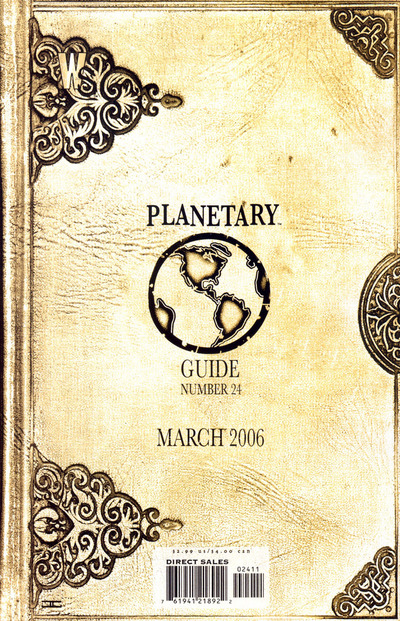
    Many posts ago I referred to the Planetary comics series by Warren Ellis and John Cassaday as having ended. I was incorrect. Over the last two days I re-read what I thought was the complete 26-issue series. I was doing a little online research just now before writing some of my impressions on the series, when I learned that there will be a 27th epilogue issue. Well, the “epilogue” part explains why I thought the series had ended, since the major plot gets all wrapped-up in issue 26 (except for the fate of Ambrose Chase). Hell, the cover of #26 has Elijah Snow about to place the final piece into a puzzle.

    I was very slow to pick up on what Ellis was doing with this series. I am an incredibly dense, incredibly literal reader. My favorite example of this comes from my high-school reading of John Barth’s “Night-Sea Journey” story from his book Lost In the Funhouse. Until I got to class I thought it was a story about some fish-men on another planet swimming towards a union with a goddess figure. I later learn from my classmates that it is the story of fertilization as told by the sperm.

    Oh.

    Likewise, when I first discovered Planetary it took me a while to realize how much the series is Ellis playing with other people’s creative properties, whether superheroes, or pulp heroes, in slightly disguised ways. His take on the Fantastic Four is brilliant. In fact my main problem with the series is that Randall Dowling (the Reed Richards analogue) is set up as such an invincibly brilliant, all-seeing opponent, yet he is ultimately defeated far too easily.

    The entire Planetary team has already been defeated by the Four in the past, completely off-panel, making it seem like the Four easily took them all down. When Elijah Snow is captured and has memory blocks implanted in order to keep his team alive, Dowling tells him that as opponents, Planetary are merely an amusing diversion. In issue #25, Ellis finally reveals the nature of Randall Dowling’s powers. Rather than physically stretch, like Mr. Fantastic, Dowling’s “mind stretches, and worms out, and lays eggs. And reproduces. Anyone who’s ever been within a hundred feet of Randall Dowling . . .probably is Randall Dowling.” Elijah was Dowling’s prisoner, and Dowling’s opponent, so with a set-up like this, one would assume that he is under Dowling’s control. Apparently not, nothing ever comes of this speech. When Elijah finally confronts Dowling in issue 26, Dowling threatens “I can get into your brain before your powers harm us.” That is all we get from him. He never actually does anything. In 26 issues Dowling has been set-up as the ultimate opponent, and all he does at the end is get outwitted and defeated. He never uses his powers once, in any form. This is a major disappointment to me, as I would have wanted to see these mind-stretching powers in use, in a creative Ellisean way.

    That’s it, that’s my complaint. Otherwise, I love the series. So much of it comes down to Cassaday’s art and Laura Martin’s colors. The concepts work because they are so visually effective. Cassaday does a great job of giving new visual interpretations of classic character concepts. I can’t imagine the series working with any other artist. He really is in a class of his own.
    IK

    planetary25-image.jpg

  • Live Garifuna music in Portland!

    8/11

    Since I always complain about how the Portland print media usually ignore any sort of international music event, I have to give credit where credit is due. Brett Campbell is a byline that has cropped up in the Oregonian and the Willamette Week in the last year. I have been pleasantly surpised recently to see international music concert previews in the papers, and his name is usually attached to them. If it wasn’t for his write-up of the Andy Palacio show at the Oregon Zoo last Wednesday, I wouldn’t even have been aware of it happening. Thanks, Brett. (I later learned Luciana Lopez wrote it up on her oregonlive.com blog, so thank you, Luciana.  -She later wrote to say, “i just wanted to note that i also put him in my five live column on aug 3 (complete with pic). because, frankly, i totally feel you on the need to spotlight a broader range of music in pdx!” You go, Luciana!)
    I am not a fan of Andy’s music, but I am a big fan of Garifuna music aka punta, aka punta rock. Andy is the very mellow, feel-good face of Garifuna music, and the only Garifuna artist available through mainstream music channels in the US. In fact, he announced from the Oregon Zoo stage that his album has officially entered the Billboard world music chart. Let’s say you live in another country and the only Rock’n’Roll artist available is Sting, or Dave Matthews. You wouldn’t know that rock’n’roll could be the Ramones, or Blonde Redhead, or The New Bomb Turks, or whatever. Garifuna music is like that; there are many artists, and many styles, but Andy Palacio is all you will find in the USA. There is one website for punta music called garinet.com, but it has not been working for me lately, so I have to get all my punta CDs from a Garifuna DJ named Oscar who lives in the Bronx. Thank you, Oscar.

    Even though I like my punta percussion-centric, and brimming with hyperspeed-polyrhythms, I went to see Andy Palacio, since I will probably never get another chance to hear live Garifuna music in Portland. The fact that including the bassist, there were more guitarists than percussionists, made it clear that this was not my preferred style of punta. When I saw Garifuna Legacy in Livingston, Guatemala in 1999, I don’t remember a single guitarist, just two keyboardists, and a battery of percussion. The traditional punta group, Los Juveniles de Garifuna, from Livingston, were all percussion, except for melodies played on a conch shell and chanting. -Andy had no turtle shells!- Traditional punta involves turtle shells hanging from a percussionist’s neck that he plays with sticks, in addition to rattles, and several sizes of drums. Andy Palacio’s group did have a guy on rattles, one guy sitting with a traditional drum, one guy with a mixed drum kit, a bassist, and three guitarists. I was really hoping for a stronger rhythmic attack from Mr. Palacio in a live setting. No dice. But Andy is a charming performer with a great spirit, and a real passion for sharing Garifuna music and culture. The crowd was loving it, there were even several Belizean flags, and Andy commented when he saw Belikin beer from the stage. His songs were slowish, with a gentle, Caribbean vibe. The whole time I was watching the stage I found myself wishing that the band would launch into a Garifuna Legacy cover, tripling their pace in the process. I kept singing Garifuna Legacy chants while watching Andy. Despite this, I decided he was probably the best Garifuna musician to spread the music to the middle-aged-with-children crowd in attendance. I might have preferred something harder and faster, but if Garifuna Legacy were to take the stage, they would probably clear everyone who wasn’t up for the speed and intensity. I left with very warm feelings for Andy, and his efforts to share Garifuna culture with us whiteys, but I still left halfway through to go home and listen to Garifuna Legacy CDs.

    I love the highly syncopated polyrhythms of punta. I had heard punta rock several times travelling through Belize, and always excitedly asked whoever was playing it, what it was they were listening to. When I heard it booming from the beach in Livingston, I rushed on to the sand floor of one of the beach shack discos, set afire by the punta rhythm. I had heard Aziatic’s “Chatty Chatty” at the Baron Bliss day celebration in Belize City a few weeks before, and promptly approached the DJ to find out what it was, but when I heard it the second time in the disco thatched shack, it was an epiphany of lysergic energy. As I white-boy danced in ecstasy at the center of the dance floor I wondered why all the black Garifuna dancers were staring at me with “What the fuck?” expressions on their faces. I wasn’t the only whitey tourist at the beach shack, so I didn’t think it was because I was a white boy. After dancing for a while with people eyeing me warily as if I was invading their territory, I realize that every single person on the dance floor was coupled except for me. Ohhhhhhhh. -It’s a couples dance- no wonder everyone was tripping out on my solo dance floor exhibition.

    To my eyes the dance called punta looks like two people welded together at the crotch, where both hip regions are buzzing like hummingbirds in a locked rhythm, while the rest of their bodies are entirely still. In fact, the men try to look bored and uninvolved while they are crotch buzzing their partner. While the genitals are buzzing against each other, the couple slowly rotates in a circle, although I never saw any foot motion to suggest how their bodies were moving in a circle. It was like magic. I assumed everyone in the village was monogamously partnered, since the dance was so erotic. I later learned that everyone on the dance floor was single, the only signifier of a monogamous relationship (according to Livingston musician Denis circa 1999) is when the woman reverses herself, and grinds her backside up against the man’s crotch.

    Thanks to the perreo, that is now just 14-year olds having fun.

    IK

  • The Oregonian reviews our Atlas show with Joro-Boro

    8/13/07

    Thanks to everyone who came down to Holocene on Saturday to give our guest DJ Joro-Boro a sweaty Portland welcome. The wonderful Luciana Lopez of the Oregonian reviewed the show. In the nearly four years Atlas has been around, no one has ever brought a photographer and reviewed our night. Little do most people know that Atlas is Holocene’s longest running dance night. Only Tart comes close to our longevity at that club.

    Luciana showed her reporter’s mettle by arriving early and staying until nearly 3am. You are not going to see many music reporters putting in that kind of effort on a DJ event. Thank you, Luciana.

    Scene at Holocene Opens a World of DJ Beats by Luciana Lopez

  • Mercury feels the balkan love

    The Portland Mercury wrote a feature on this Saturday’s special Joro-Boro edition of Atlas.  Thanks to Chas Bowie for calling attention to this show.
    Check it.

  • Jack is still the King

    newgods01.jpg

    So I still haven’t finished Third Coast, or Blue Monday: Fats Domino and the Lost Dawn of Rock ‘n’ Roll, and instead I tore through Tales to Astonish: Jack Kirby, Stan Lee, and the American Comic Book Revolution by Ronin Ro. I realized while I was reading it that I have probably read every book Ronin Ro has written, even Gangster, his collection of hip-hop essays. The only one I may not have finished is Raising Hell: The Reign, Ruin, and Redemption of Run-D.M.C. and Jam Master Jay. In fact, I realized that while I was pretending that I had been focused on finishing the Southern hip-hop and Fats Domino books, I had finished reading several other books, one of which was Ro’s bio of Dr. Dre. He certainly consistently writes about people and things I am interested in, even if I have my criticisms of his work.

    The book Tales to Astonish really hit me with just how much of the licensed properties that make billions of dollars for the companies that own Marvel and DC came from Jack Kirby’s brain, and the man was a freelancer who owned the rights to none of them, and made a page rate fee for creating the bulk of the Marvel Universe, and still-vital chunks of the DC Universe (yielding material for the current DC mega-events). What’s so sad is that he co-created characters like the X-Men, Captain America, the Fantastic Four, the Hulk, Silver Surfer, the Avengers, Black Panther (the first black superhero was wasn’t a 1940’s black face stereotype), and even an early version of Spider-Man called Spiderman which eventually became the character developed by Steve Ditko and Stan Lee, yet he nor his family will ever receive a cent of royalties of all the money these characters make their corporate owners.

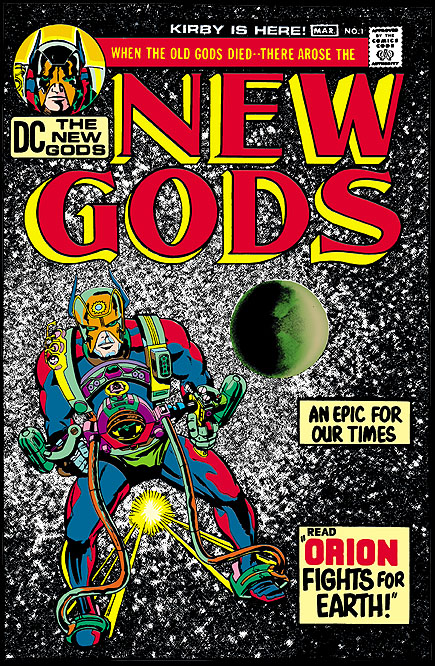
    Jack Kirby is a legend who blew me away upon first exposure. My grandfather gathered comics thrown away by people while doing his newspaper route and my grandmother gave me an assortment when I visited them once as a child. In the batch was New Gods #2 which instantly wowed me; Metron, his Mobius chair, the gods trapped on the edge of the Source Wall. Boom! (Tube.) I don’t know that I had ever paid attention to an artist’s credit in a comic book before, but one comic was enough to have me remember the name Jack Kirby. Jack was my first “favorite artist,” until some time later I picked up a copy of Uncanny X-Men 140 and discovered John Byrne’s work.

    Born Jacob Kurtzberg, the man changed his name to Jack and proceeded to get jacked. Poor Jacob. Stanley Lieber did a lot better. The book makes a point of how effectively “Stan Lee” took credit for all the Marvel characters, and continues to this day as a million-dollar-a-year consultant for the company. To drive the point home even further, I was describing to a friend in Philly what the book was about, and when I mentioned all the superheroes Jack and Stan created, he said, “Yeah, they were all invented by Stan Lee. I’ve never heard of that other guy.” So sad. I got really emotional reading about all Jack’s efforts to stay afloat over the years, while his creations raked in millions for those that had nothing to do with bringing them into the world. At least Stan Lee had a salary; Jack was always freelance, and never owned or received royalties for any of his creations.

    As a kid I loved the cartoon series Thundarr the Barbarian, and the book described Jack’s having created many of the villains on that show, which I didn’t know at the time. One of the bad guys, Lord Argoth of a Thousand Eyes, was so visually astounding for children’s television at the time, it makes total sense that he was a Jack Kirby creation.

    I was also lucky enough to stumble upon issue number one of OMAC as a child. See the following images for an idea of how much of an impact that had on my little child mind.

    omac.jpg
    I lifted these images from this blog post.

    omacfriend.jpg

    Jack Kirby was the first creator to give me the idea of becoming not just a comics artist, but a comics writer and artist. So many comics are created by separate writers and artists, that as a child, that was my only concept until I read the credits for New Gods #2. Also in elementary school I discovered Frank Miller’s Daredevil, and Jim Starlin’s Captain Marvel and Warlock comics, which furthered my appreciation for comics writer-artists. Up until I graduated from high school there was no other thought in my mind but that I would be a comic book writer and artist. I just thought I would go to college first, and get a solid academic education. After I left for college I never created another comic book again.

    IK